Firefighting Training: Essential Skills, Safety Tips and Career Opportunities
Firefighting training provides the knowledge, practical skills, and safety awareness needed to respond effectively to fires and other emergencies. Whether you are considering a professional firefighting career or simply want workplace preparedness, structured fire safety training can help you understand hazards, emergency response, evacuation and prevention. From fire safety training in Australia programmes to workplace learning, good training combines theory with practical knowledge of equipment, firefighting techniques, fire extinguisher training, risk identification, and safe fire evacuation procedures.
Understanding Firefighting Training
Firefighting is a physically and mentally demanding field where preparation can directly influence how safely an emergency is managed. Training therefore goes beyond learning how to put out a fire.
Participants need to understand how fires develop, how smoke and heat behave, how different materials burn, and why certain firefighting methods are appropriate for particular situations. They also learn how to work as part of an emergency response team while maintaining communication and personal safety.
For workplace staff, training is generally focused on prevention, raising the alarm, evacuation, and responding appropriately within the limits of their role. Professional firefighters receive much more extensive operational training.
Crucial Competencies Acquired during Training
1. Hazard awareness and fire prevention
One of the most crucial elements of fire safety is prevention. Students should be aware of typical sources of ignition, flammable objects, electrical risks, and risky behaviors that raise the risk of a fire.
They should also know how to identify hazards before an incident occurs. Good workplace awareness can help organisations address problems early rather than relying entirely on emergency response.
2. Fire Risk Assessment
A fire risk assessment involves identifying potential fire hazards, considering who could be affected and determining appropriate control measures.
Depending on the setting, this may include examining electrical equipment, storage arrangements, escape routes, alarm systems and emergency access.
Organisations can go from only responding to fires to preventing them by having a thorough understanding of risk assessment.
3. Training on Fire Extinguishers
Participants in fire extinguisher training learn about the functions and constraints of portable extinguishers.
Different classes of fire require different extinguishing agents. Instead of controlling the situation, using the wrong extinguisher can make it more dangerous.
Training should therefore focus on recognising when an extinguisher may be appropriate and, equally importantly, when a person should evacuate instead of attempting to fight the fire.
Only people who are appropriately trained and confident should consider using firefighting equipment, and they should never place themselves at unnecessary risk.
Firefighting Techniques and Practical Response
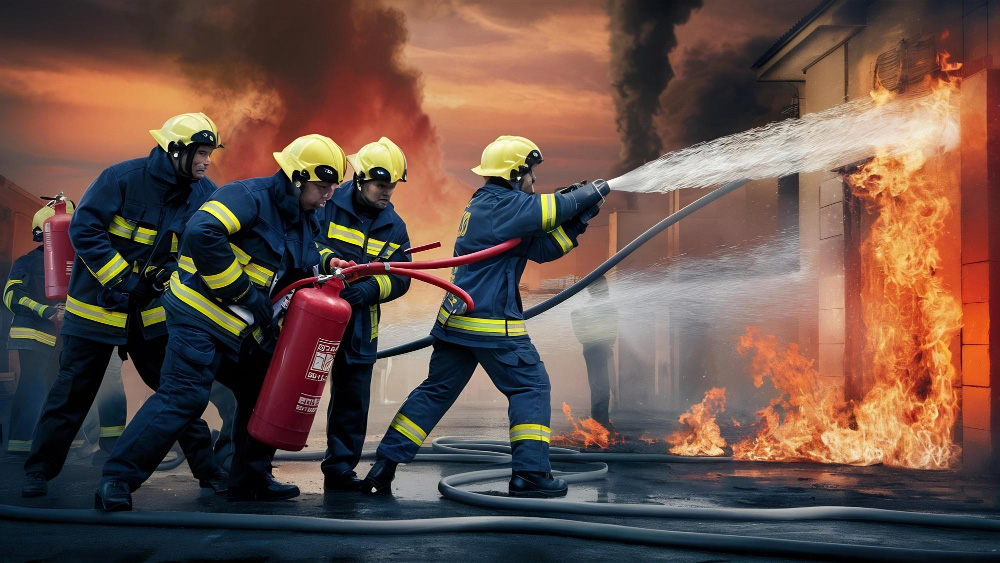
Professional firefighters learn a wide range of firefighting techniques, including hose operations, search procedures, ventilation principles, equipment handling, and coordinated incident response.
These techniques are normally taught through practical exercises under controlled conditions. Training allows participants to develop familiarity with protective equipment and emergency procedures before facing real incidents.
For people who aren't firefighters, the hands-on training they get should match what they are actually responsible for. The main thing is to sound the alarm, let people know about the danger, follow the plan for emergencies, and leave the area safely.
Fire Safety Procedures in the Workplace
Effective fire safety procedures should be clear, accessible, and regularly reviewed.
Employees should know:
- How to raise the fire alarm.
- What to do when an alarm sounds.
- Where emergency exits are located.
- Which evacuation route to use.
- Where the assembly point is.
- How to report concerns or hazards.
- Who has specific emergency responsibilities.
- How visitors and people requiring additional assistance will be supported.
Procedures should not exist only in a policy document. Employees need to understand them and have opportunities to practise them.
Fire Evacuation Procedures
Well-designed fire evacuation procedures help people leave a building quickly and safely during an emergency.
Training should explain the importance of responding immediately to alarms rather than waiting to confirm whether there is a genuine fire.
People should use designated escape routes and avoid lifts where emergency procedures prohibit their use. Fire doors should be used appropriately, and individuals should never return to a burning or potentially dangerous building unless authorised by emergency personnel.
Special consideration may be necessary for people with mobility, sensory, cognitive or other support needs. Emergency planning should identify appropriate assistance in advance.
Safety Tips During a Fire
The safest course of action varies depending on the situation; however a few general guidelines are crucial:
Remain composed and sound the alarm
Notify others right away and turn on the relevant alarm system.
Get out quickly
Follow the designated escape route and pay attention to any instructions given by emergency services or qualified individuals.
Never Overlook Smoke
Smoke can be poisonous and quickly impair vision. Steer clear of places that are smoke-filled.
Do Not Take Unnecessary Risks
Personal safety should take priority over protecting property.
Never Re-enter Without Authorisation
Once outside, remain at the designated assembly area and do not return to the building until emergency personnel confirm that it is safe.
Fire Safety Training Australia
For those searching for fire safety training in Australia, course requirements can vary depending on the workplace, industry, state or territory and the learner’s responsibilities.
Training providers may offer workplace fire awareness, emergency response, extinguisher awareness or more specialised programmes. Individuals should check that the course is appropriate for their role and meets any applicable organisational or regulatory requirements.
Employers should also ensure that training is relevant to the specific hazards and emergency arrangements of their workplace.
Career Opportunities in Firefighting
Firefighting can offer several career pathways for people interested in emergency services, public safety and community protection.
Professional firefighters may work for fire and rescue services, while related opportunities can exist in emergency management, fire prevention, fire safety inspection, industrial emergency response and training.
Career development can involve additional qualifications and specialist areas such as hazardous materials response, technical rescue, incident management or fire investigation, depending on the organisation and jurisdiction.
The profession requires physical fitness, teamwork, discipline, communication skills and the ability to make decisions under pressure.
Why Continuous Training Matters
Fire safety knowledge can deteriorate when it is not practised regularly. Equipment changes, workplaces change and emergency plans may also be updated.
Refresher learning helps workers remain familiar with evacuation routes, alarm procedures and their responsibilities.
Organisations should also review incidents, drills and near misses to identify opportunities for improvement. A strong safety culture encourages employees to report hazards rather than waiting for an accident to expose them.
In conclusion
Prevention, knowledge, practical skills, and disciplined emergency response are the cornerstones of effective firefighting preparation. Training helps people respond more confidently while lowering needless risks, from comprehending fire safety procedures and doing a fire risk assessment to acquiring proper evacuation techniques and equipment awareness.
Structured firefighting training can give anyone thinking about a job a starting point for building the technical, decision-making, and physical skills needed in emergency services. Continuous fire safety training can improve readiness and make workplaces safer.
Care Learning is a platform where you can get free CPD courses and enough information on multiple topics, helping learners continue developing relevant knowledge and professional skills. Apply or register today.
Frequently Asked Questions
1. What is training for combating fires?
It is organised instruction and hands-on learning intended to build knowledge and abilities for emergency response, evacuation, fire prevention, and, for professional firefighters, operational firefighting.
2. Who requires instruction in fire safety?
Workplace and role-specific requirements differ. While professional responders and designated fire wardens might need further training, employes should obtain the proper information on their organisation's fire procedures.
3. Is fire extinguisher training important?
Yes. It helps people understand extinguisher types, their appropriate applications, and their limitations. Training should also emphasise that evacuation is the priority when conditions are unsafe.
4. What is included in a fire risk assessment?
It generally involves identifying fire hazards, considering people who may be at risk, evaluating existing controls and determining measures needed to reduce risk.
5. Can someone start a career as a firefighter after completing training?
Indeed. Even though the rules for getting into firefighting programs may vary from place to place and group to group, becoming a professional firefighter can lead to job opportunities in emergency services and related fields.