Learn Basic Life Support Online: Essential Skills for Healthcare Workers
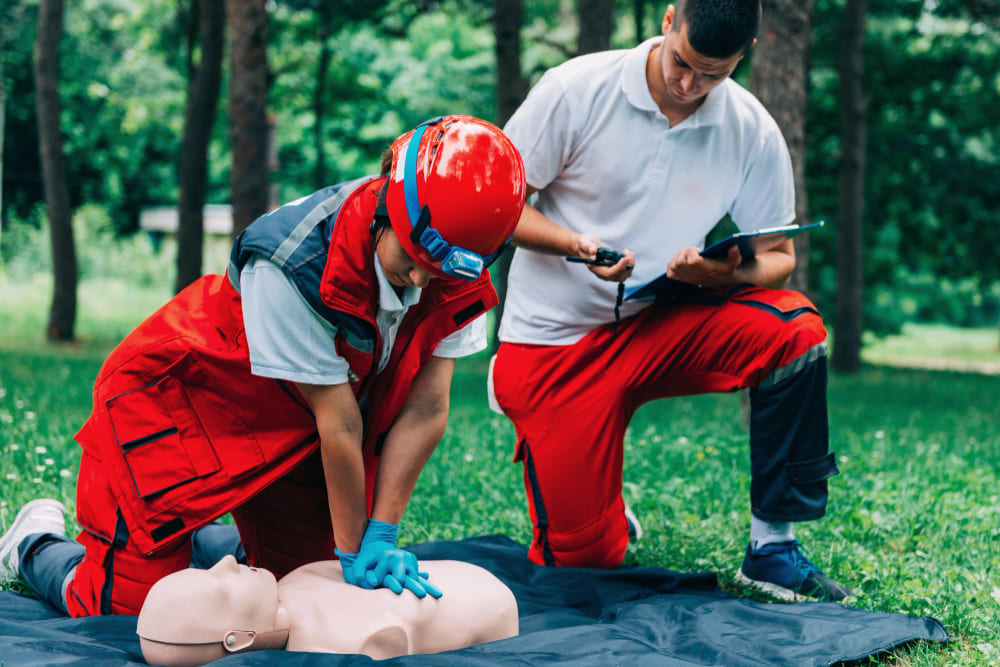
Healthcare professionals can react quickly when a patient stops breathing or becomes unresponsive by being familiar with basic life support. Because crises like cardiac arrest can occur in hospitals, care facilities, community settings, and other healthcare environments, these abilities are crucial. Professionals can respond safely while awaiting additional medical assistance by learning the proper response, comprehending the order of steps, and retaining confidence via frequent training.
What Is Basic Life Support?
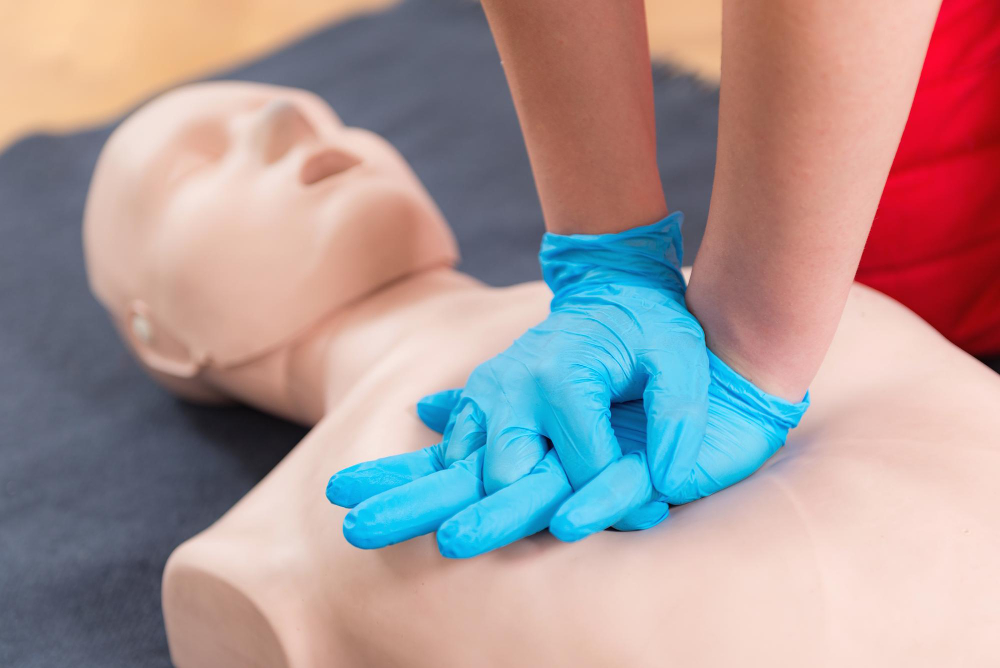
Basic life support (BLS) refers to a group of essential emergency skills used when a person is unresponsive and not breathing normally.
The primary aim is to maintain circulation and oxygen delivery to vital organs until further medical care becomes available. For healthcare workers, this involves recognising an emergency quickly, calling for appropriate assistance, beginning CPR when indicated, and using an automated external defibrillator (AED) when available.
BLS is not limited to one profession. Nurses, healthcare assistants, doctors, allied health professionals, support workers, and other staff working around patients can benefit from understanding these fundamental emergency procedures.
Why Basic Life Support Skills Matter
Strong basic life support skills can make a significant difference during the first few minutes of a medical emergency.
Healthcare workers may be among the first people to recognise that a patient has deteriorated. Delayed recognition or hesitation can affect the speed at which emergency interventions begin.
Professionals can benefit from regular training:
- Identify someone who is not responding
- Appropriately assess breathing
- Turn on emergency support
- When necessary, begin CPR.
- Safely use an AED
- React to choking
- Contribute successfully to an emergency response team.
- In an emergency, speak plainly.
BLS training should complement, rather than replace, the clinical policies and emergency procedures of the healthcare organisation where a professional works.
Defining the Fundamental Life Support Procedures
Healthcare personnel should be aware of the general steps involved in an emergency, but the precise method should adhere to local workplace norms and current recognised guidelines.
The basic life support steps begin with ensuring that the environment is reasonably safe before approaching the person.
After that, the responder should evaluate the person's response and check to see if their breathing is normal. Emergency aid should be called right away if the person is not breathing normally and is not responding.
CPR should then be started according to current training and guidance, while an AED should be obtained as quickly as possible if one is available.
These actions need to happen efficiently rather than being treated as separate, lengthy procedures.
Recognising Cardiac Arrest
Recognising cardiac arrest quickly is one of the most important parts of BLS.
A person experiencing cardiac arrest may suddenly collapse, become unresponsive, and stop breathing normally. Abnormal or irregular gasping should not automatically be interpreted as normal breathing.
When evaluating a person who has collapsed, healthcare professionals should adhere to local emergency protocols and their training. Resuscitation and emergency help should be started right away if cardiac arrest is suspected.
Early CPR and rapid access to defibrillation are important elements of the emergency response.
How to Use an AED
An automated external defibrillator is designed to analyse a person’s heart rhythm and, when appropriate, deliver an electrical shock.
Understanding how to use an AED is an important part of BLS education.
Modern AEDs provide voice or visual prompts that guide the responder through the process. Generally, the responder should switch on the device, attach the pads as directed, and follow its instructions.
The AED analyses the heart rhythm and determines whether a shock is advised. Nobody should touch the person during rhythm analysis or shock delivery when instructed not to do so.
After the device gives its instructions, CPR should continue according to the AED prompts and current resuscitation guidance.
Instead of depending solely on textual instructions, healthcare personnel should obtain hands-on AED training.
First Aid for Choking
Another crucial element of emergency preparedness is choking first aid because a clogged airway can soon become life-threatening.
A person with a significant airway obstruction may be unable to speak, breathe, or cough effectively. The appropriate response depends on the severity of the obstruction and the person’s condition.
Healthcare workers should follow their current BLS or first-aid training and workplace emergency procedures. If the person becomes unresponsive, the response changes and emergency resuscitation procedures should be followed.
Training should cover recognition of choking as well as appropriate interventions because simply knowing that someone is choking is not enough to respond effectively.
Basic Life Support Training in Australia
Healthcare workers in Australia should ensure that their training is relevant to their professional responsibilities and workplace requirements.
Basic Life Support Australia courses may differ in delivery format, assessment methods, practical components, and renewal expectations. Professionals should check what their employer, registration requirements, or relevant professional standards require.
Online learning can be useful for developing theoretical knowledge, but healthcare workers should determine whether their workplace requires practical skills assessment or face-to-face demonstration.
Can You Learn BLS Online?
Online education can make BLS information more accessible to healthcare professionals who need flexible learning options.
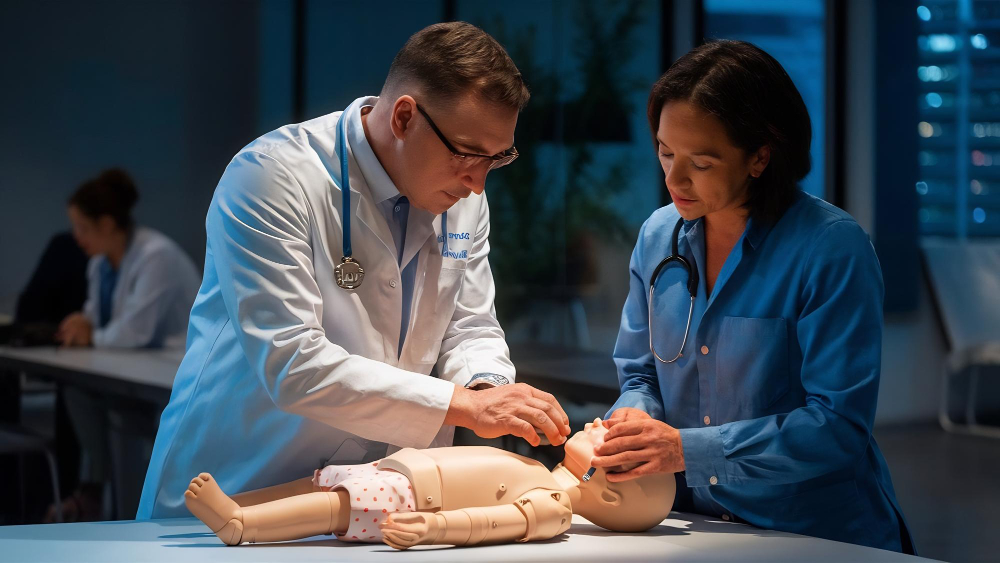
A basic life support training online programme may cover emergency recognition, CPR principles, AED awareness, choking response, and other essential concepts.
Healthcare professionals should, however, make a distinction between acquiring theoretical knowledge and exhibiting practical skill. The greatest way to reinforce the physical skills involved in CPR and AED use is through adequate hands-on instruction and testing when necessary.
A free online basic life support course can therefore be useful as an educational resource, but learners should check whether it provides the certification or practical assessment required by their employer or professional body.
Free Basic Life Support Training and CPD
Professionals may also search for free basic life support training when they want to refresh their knowledge without committing to a paid programme.
Free educational resources can support awareness and continuing professional development. However, healthcare workers should verify the course provider, learning outcomes, assessment method, certificate status, and whether the training is recognised for their particular professional or workplace requirement.
The value of a course should be assessed by its quality and relevance rather than cost alone.
Developing and Maintaining BLS Competence
BLS should not be treated as knowledge that is learned once and then forgotten.
Practical skills may erode if they are not used often. Healthcare organisations can improve competency through emergency drills, simulation exercises, refresher training, and explicit resuscitation protocols.
Professionals can also strengthen their knowledge by reviewing emergency procedures and identifying where emergency equipment such as AEDs is located within their workplace.
Good preparation reduces uncertainty when a real emergency occurs.
Common Mistakes to Avoid
Some common problems during emergency responses include:
- Delaying activation of emergency assistance
- Failing to recognise abnormal breathing
- Refusing to perform CPR when it's required
- Forgetting to send someone to get an AED
- Disregarding AED guidelines
- Abruptly ceasing CPR
- Ineffective communication with the responding team
- Assuming that online theory demonstrates practical competence on its own
Regular basic life support training can help healthcare workers recognise and address these gaps.
Basic Life Support Skills for Healthcare Teams
Effective emergency response is rarely the responsibility of one person alone.
Strong basic life support skills should be supported by teamwork, communication, role allocation, and familiarity with local emergency procedures.
During an emergency, one healthcare worker may begin CPR while another contacts the emergency response team and another retrieves the AED. Clear communication can help prevent duplication and ensure important tasks are completed promptly.
Healthcare workers should therefore learn BLS as both an individual skill and a team-based response.
Final Thoughts
BLS is a fundamental area of emergency preparedness for healthcare workers. Understanding how to recognise an emergency, initiate an appropriate response, perform CPR, respond to choking, and use an AED can help professionals act more confidently when urgent situations occur.
Make sure the program is suitable for your professional duties and workplace standards, whether you are looking for online basic life support training or are thinking about taking a hands-on course. While practical training can assist build confidence and physical abilities, online schooling can offer essential theoretical understanding.
Care Learning is a platform where you can get free CPD courses and enough information on multiple topics, supporting healthcare professionals who want to expand their knowledge and continue their professional development. Apply or register today.
FAQs
1. What does basic life support entail?
Essential emergency procedures, such as CPR and the use of an AED when necessary, are used to assist a person who is unconscious and not breathing regularly. This is known as basic life support.
2. Can someone learn the basics of life support through an online course?
Online courses can offer useful theory, but to really learn CPR and AED techniques, you might need to be tested and get hands-on practice, especially if your job or profession requires it.
3. What are the most important BLS skills for healthcare workers?
Knowing how to recognise cardiac arrest, check for breathing and responsiveness, start CPR, call for help, use an AED, and properly respond to choking are all important skills.
4. Does a free BLS course count as meeting work requirements?
Not always. Some employers and professional groups might set specific rules about certification, hands-on testing, who can offer the courses, and how to renew the certification. Always check the requirements that are relevant to your job.
5. Why is AED training included in BLS?
An AED can analyse heart rhythm and deliver a shock when appropriate. Knowing how to respond to its prompts allows trained responders to use the device effectively during a cardiac emergency.