Where Can I Find a Phlebotomy Course Online for Blood Collection?
Have you been wondering where to find a reliable phlebotomy course online that can help you build a stronger understanding of blood collection? Online learning can be a convenient starting point for healthcare professionals and learners who want to develop relevant knowledge around their existing commitments. However, because blood collection is a practical clinical activity, it is important to understand the difference between online theory, practical skills training, and recognised professional competency.
What Is Phlebotomy?
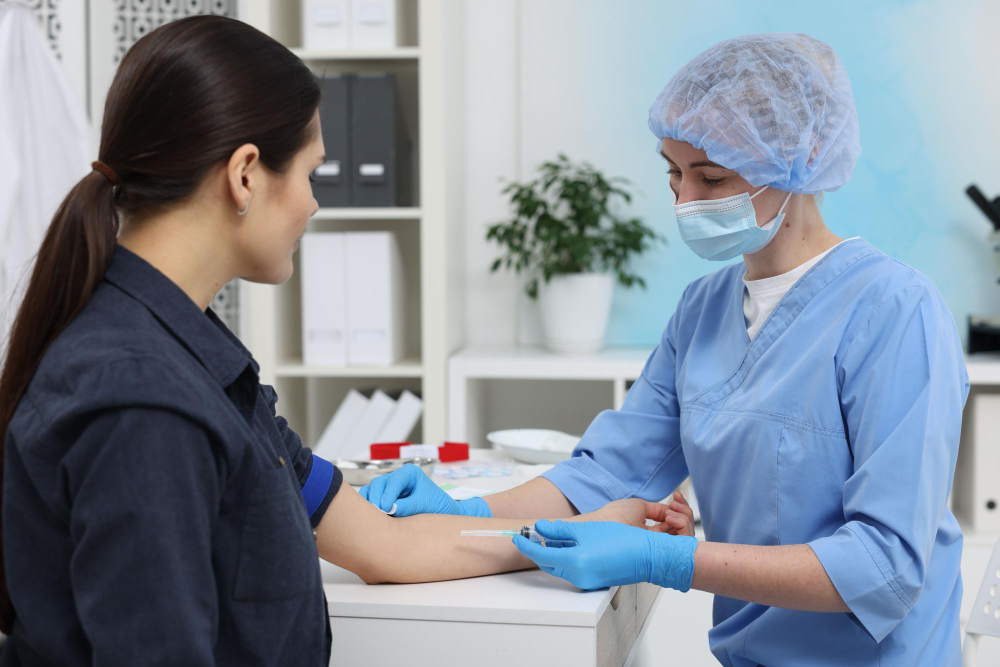
Phlebotomy is the process of obtaining blood from a person for purposes such as laboratory testing, diagnosis, monitoring, or other clinical investigations.
Although blood collection may look like a simple procedure, it involves several important considerations. These include confirming patient identity, preparing equipment, communicating with the patient, selecting an appropriate collection site, maintaining infection prevention practices, handling specimens correctly, and disposing of sharps safely.
A suitable phlebotomy course can introduce learners to these principles and explain why each stage of blood collection needs to be performed carefully.
The precise responsibilities of a healthcare worker depend on their role, training, competence, employer requirements, and applicable regulations.
Why Take an Online Phlebotomy Course?
Healthcare education is now more accessible thanks to online learning.
Students can frequently access resources from home and complete courses at a speed that works for them.
Healthcare professionals who are currently employed or those considering a different career path may find this flexibility especially helpful.
A good programme may introduce the theoretical foundations behind blood collection, patient safety, infection prevention, specimen handling, and professional responsibilities.
However, online education should not automatically be regarded as a replacement for supervised practical training.
What Does Phlebotomy Training Cover?
A comprehensive phlebotomy training programme may cover several areas related to safe blood collection.
Common subjects can include:
- Basic anatomy and physiology
- Vein identification
- Patient preparation
- Communication and consent
- Infection prevention
- Personal protective equipment
- Blood collection equipment
- Specimen identification and labelling
- Safe sharps handling
- Sample transportation
- Common complications
- Documentation
- Professional responsibilities
The purpose of this knowledge is to help learners understand not only what happens during blood collection but also why particular safety procedures are important.
Can You Learn Blood Collection Entirely Online?
This is one of the most important questions to consider. An online course can provide valuable theoretical knowledge, but practical blood collection generally requires appropriate hands-on instruction and supervised assessment when competency is required for a particular role.
For this reason, learners should carefully examine what an online programme actually provides.
A course that teaches the theory of venepuncture should not necessarily be interpreted as granting permission or competency to perform the procedure independently.
The requirements can vary depending on the profession, workplace, location, and scope of practice.
Understanding Phlebotomy Certification
Learners may come across programmes offering phlebotomy training certification after completion.
Before enrolling, investigate what the certificate represents. Some certificates confirm that a learner completed an educational course and assessment.
Others may be associated with specific professional or vocational requirements. A certificate should not be assumed to have universal recognition.
If your goal is employment, check whether the training is accepted by the employers or organisations you are interested in.
What Should You Look for in an Online Course?
Choosing an online course requires more than looking at the price or course duration.
Start by reviewing the syllabus. The content should be relevant to your learning objectives and provide clear information about what you will learn.
You should also investigate how learning is assessed.
A programme may use quizzes, assignments, knowledge checks, or other assessment methods.
If practical competency is required, determine whether hands-on training and supervised assessment are included or whether they need to be completed separately.
Other elements that should be examined are:
- Length of the course
- The format of learning
- The framework for assessment
- Details of the certificate
- Availability of practical training
- Learner assistance or tutoring
- Updates on the course
- The intended group of learners
- Acknowledgment by pertinent organizations
Phlebotomy Training Online Course: What to Expect
A phlebotomy training online course will generally focus heavily on theoretical learning.
Lessons may use videos, presentations, written resources, diagrams, assessments, and interactive activities to explain the subject.
This format can be useful for revising concepts and building foundational knowledge.
However, learners should distinguish between understanding a procedure academically and demonstrating that procedure safely in a real clinical environment.
Practical competence involves factors that cannot always be replicated through an online lesson, including positioning, communication, equipment handling, and responding appropriately to unexpected situations.
Finding a Phlebotomy Course Online in Australia
People researching a phlebotomy course online in Australia should pay particular attention to local requirements.
Healthcare education and professional expectations can differ between countries and jurisdictions.
Australian learners should therefore establish whether a course is intended for general education, professional development, or preparation for a specific occupation.
If your intended role involves blood collection, it is sensible to check the expectations of prospective employers before enrolling.
This can help ensure that the training you choose is relevant to your career plans.
Options for Learners in Melbourne
Those searching for a phlebotomy course in Melbourne may encounter online, classroom-based, and blended learning options.
There may be more scheduling flexibility when studying online.
However, students who want to be practically competent should find out if in-person skills training is offered.
When both theoretical knowledge and supervised practical experience are needed, a mixed program might be more suitable.
Prior to making a choice, always verify the most recent information provided by the course provider.
What About Perth?
A phlebotomy course in Perth may be relevant for learners looking for training opportunities in Western Australia. The same principle applies when comparing providers.
Consider the learning outcomes, practical requirements, assessment methods, certificate, and recognition before enrolling. If employment is your ultimate objective, researching job descriptions in your preferred healthcare setting can also help you identify the knowledge or competencies employers commonly request.
Patient Communication Is an Important Skill
Phlebotomy is not simply about collecting a blood sample. Patients can feel nervous, uncomfortable, or concerned about needles.
Healthcare workers therefore need to communicate professionally and respectfully.
Explaining relevant information within the boundaries of the role can help patients understand what is happening.
Maintaining dignity and responding appropriately to anxiety or discomfort are also important elements of patient-centred care.
Infection Prevention and Safety
Infection prevention is fundamental to clinical practice. Learners should understand the importance of appropriate hand hygiene, personal protective equipment, environmental cleanliness, and safe handling of equipment.
Sharps safety is particularly important because used needles and other sharp instruments can present risks to both patients and healthcare workers.
Training should therefore emphasise safe disposal and appropriate responses to incidents according to workplace procedures.
Managing Possible Complications
Blood collection does not always proceed exactly as planned. Patients may experience discomfort, bruising, bleeding, dizziness, or fainting.
There can also be situations where a collection attempt is unsuccessful.
Appropriate education should help learners understand these possibilities and recognise when a situation requires escalation.
The response should always remain within the person’s professional role and level of competence.
Choosing Training Based on Your Career Goal
Before selecting a programme, consider why you want to study phlebotomy. You may be interested in gaining general healthcare knowledge.
You may already work in healthcare and want additional professional development.
Alternatively, you may be exploring a future role where blood collection forms part of your responsibilities.
Each goal can require a different learning pathway. Understanding your objective first makes it easier to assess whether an online programme is sufficient or whether additional practical education is necessary.
How to Get the Most Out of Online Education
The best results from online learning come from an active approach. Instead of just watching lessons, take notes.
Perform thorough knowledge checks and go over subjects you find challenging again.
To improve your comprehension, use reliable educational resources.
Use the opportunity to ask questions that the software offers.
Above all, be aware of the limitations of online learning when it comes to practical clinical competence.
Concluding Remarks
A handy option to learn about blood collection, patient safety, infection control, specimen handling, and associated healthcare principles is through an online phlebotomy program.
Students should, however, make a rigorous distinction between theoretical instruction and actual proficiency.
The best option will depend on your location, professional obligations, career aspirations, and the demands of the healthcare environment in which you intend to work.
Before enrolling, investigate the course content, assessment process, certification, practical components, and recognition. By following these guidelines, you can select a course of study that actually advances your career rather than just giving you a degree.
In conclusion
When done properly, learning about blood collection can be a useful addition to one's knowledge of healthcare.
An online course can provide flexibility and a well-organized introduction to key ideas.
Practical instruction and supervised evaluation may need to be included in the broader learning route when practical competency is needed.
Care Learning is a platform where you can get free CPD courses and enough information on multiple healthcare and professional development topics. Its courses can support ongoing learning and help professionals expand their knowledge across different areas of healthcare.Apply or register today.
FAQs
1. What is a course in phlebotomy?
A phlebotomy course covers topics like how to collect blood, how to prepare patients, keeping things safe, avoiding infections, handling blood samples properly, and other important information related to clinical practice.
2. Is it possible to learn phlebotomy online?
Many parts of the subject can be learned online, but whether you need hands-on practice with blood collection depends on your job and the rules in your area, which might require you to get trained under supervision.
3. Does completing an online course mean I'm allowed to draw blood?
Not always. Completing an online course shows you've learned the material, but it doesn't mean you're officially authorized to work in that field or that you can actually apply what you've learned in real situations.
4. Before choosing an online course, what are the things I should check for?
Check the course content, how the assessments are done, the certification you'll get, the practical training you'll do, the support you'll receive as a learner, the recognition you'll get, and how the course applies to the job you're planning to take.
5. Is online phlebotomy training helpful for healthcare workers?
Yes. It can offer easy-to-understand theory lessons and career growth opportunities, especially when paired with the right hands-on experience, as the job needs proven skills.