
Management of Mild to Moderate Fever in Children
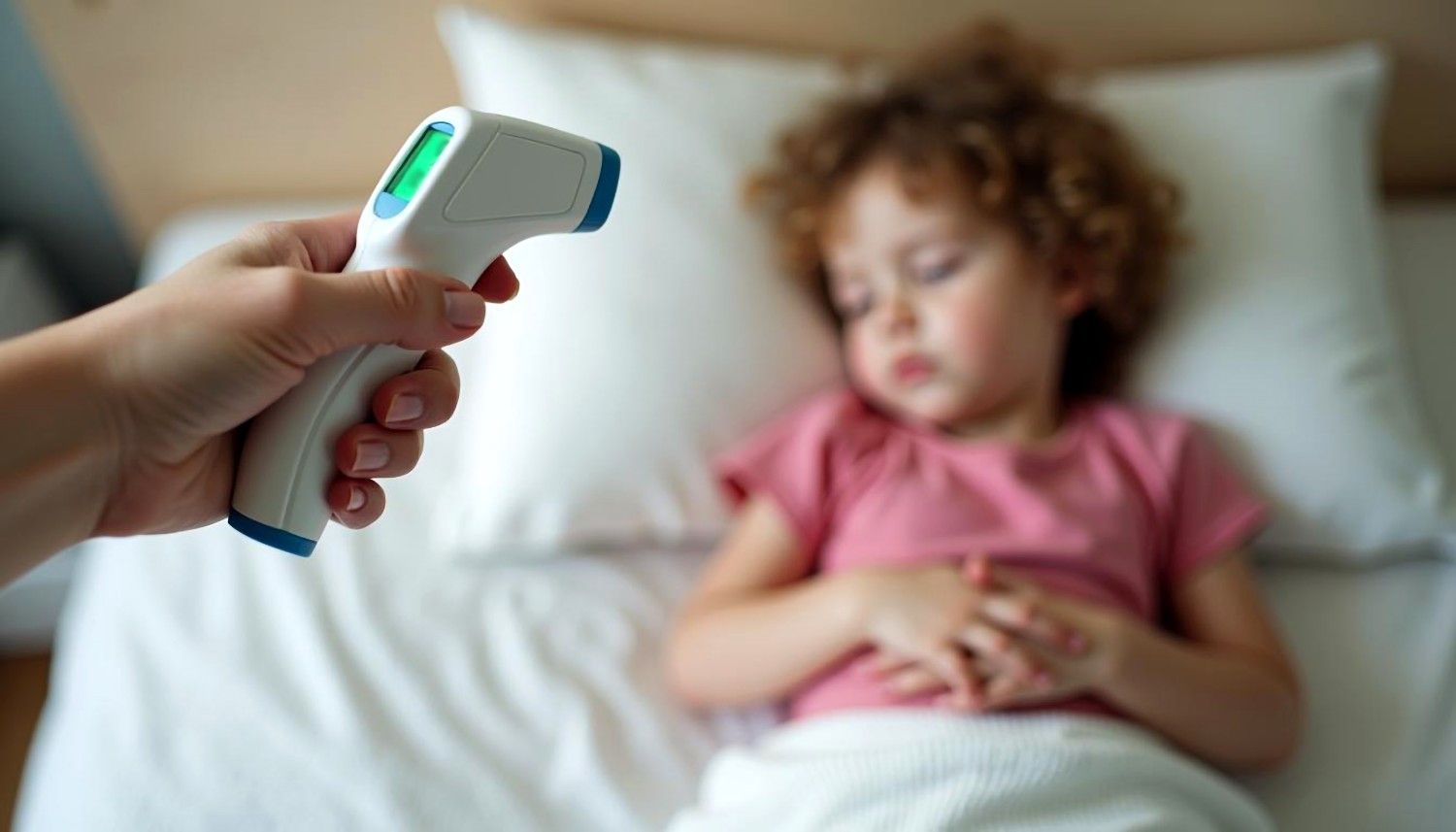
Management of Mild to Moderate Fever in Children is a Continuing Professional Development (CPD) course designed for healthcare professionals involved in paediatric, primary care, emergency, pharmacy, and community healthcare settings. The course provides evidence-based guidance on the assessment, monitoring, management, and referral of febrile children presenting with mild to moderate fever. Fever is one of the most common reasons children are brought to healthcare services. While fever itself is usually a normal physiological response to infection, it can cause significant parental concern and may occasionally indicate serious underlying illness. Healthcare professionals must therefore distinguish between self-limiting febrile illnesses and potentially life-threatening conditions requiring urgent medical intervention
.jpg)
Learning Outcomes
What you'll learn
- Identify the common causes of fever in children.
- Explain the physiological role of fever during infection.
- Assess and monitor a febrile paediatric patient using evidence-based clinical approaches.
- Recognise the signs and symptoms of serious illness in a febrile child.
- Differentiate mild to moderate febrile illness from medical emergencies requiring urgent intervention.
- Apply safe and effective management strategies for mild to moderate fever.
- Refer high-risk patients appropriately to emergency or paediatric specialist services.
- Support and educate parents and caregivers regarding fever management and monitoring.
Stay updated with our


Learning Outcomes
What you'll learn
- Identify the common causes of fever in children.
- Explain the physiological role of fever during infection.
- Assess and monitor a febrile paediatric patient using evidence-based clinical approaches.
- Recognise the signs and symptoms of serious illness in a febrile child.
- Differentiate mild to moderate febrile illness from medical emergencies requiring urgent intervention.
- Apply safe and effective management strategies for mild to moderate fever.
- Refer high-risk patients appropriately to emergency or paediatric specialist services.
- Support and educate parents and caregivers regarding fever management and monitoring.
Stay updated with our
Training Overview
- Understanding Fever in Children
- Common Causes of Fever in Children
- Assessment and Monitoring of the Febrile Child
- Management of Mild to Moderate Fever
- Recognising Serious Illness and Red Flag Symptoms
- Family Support, Communication, and Safe Clinical Practice
- Summary
.jpg)
.jpg)
.jpg)
.jpg)
.jpg)
.jpg)
Top reviews
No reviews yet.
You May Also Like
.jpg)
.jpg)
.jpg)



Take Your
Learning Anywhere
Stay on top of your learning with the Care Learning app.


Are you a qualified
Trainer or Instructor?
Join Care Learning as a trainer and deliver high-quality courses to learners across healthcare and workplace training.
Refer a Friend &
Earn Rewards.
Invite healthcare professionals to join Care Learning and get rewarded when your referral successfully joins.
Frequently asked questions
A temperature of 38°C or higher is generally considered a fever in children.
Most childhood fevers are caused by viral infections such as colds, influenza, or viral gastroenteritis.
Urgent assessment is required if the child has breathing difficulty, seizures, non-blanching rash, lethargy, dehydration, or altered consciousness.
No. Antibiotics are only effective for bacterial infections and should not be used routinely for viral illnesses.
Antipyretics should be used to relieve discomfort or distress rather than solely to lower temperature.
Fever increases fluid loss and dehydration risk, especially when associated with vomiting or diarrhoea.