
Care Certificate (Part 12) - Basic Life Support
This chapter focuses on Basic Life Support (BLS), a critical set of procedures designed to sustain life during emergency situations. It outlines the core components of BLS, including initial assessment, airway maintenance, breathing support, and cardiopulmonary resuscitation (CPR). Key aspects such as recognizing and treating obstructed airways, maintaining confidentiality, and the importance of regular refresher training are also covered to ensure effective response during life-threatening emergencies.
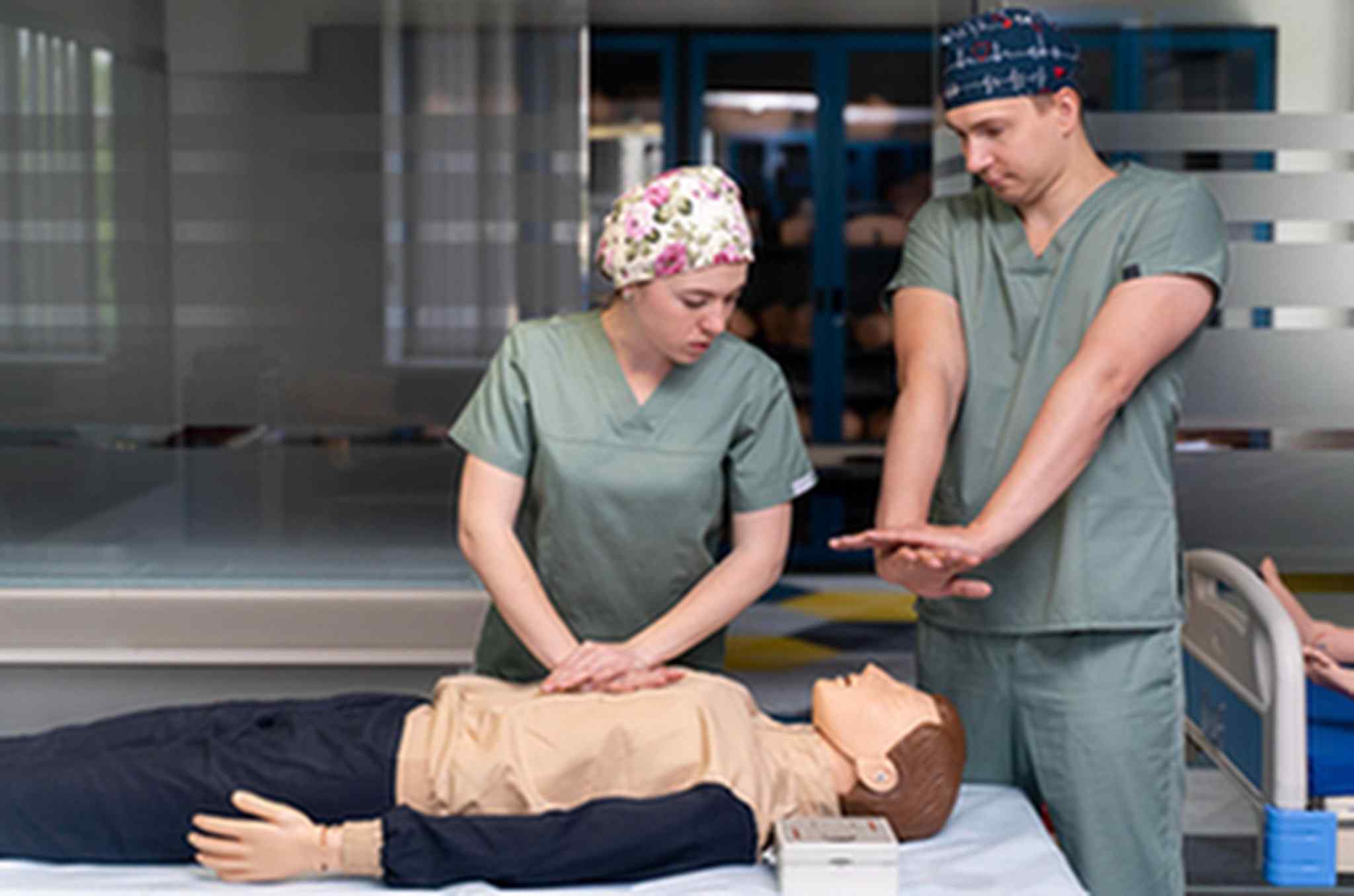
Learning Outcomes
What you'll learn
- Conduct an initial assessment using the DRABCD approach to identify and address life-threatening conditions.
- Perform effective CPR, including appropriate chest compression techniques and rescue breaths for adults, children, and infants.
- Recognize and treat obstructed airways in adults, children, and infants.
- Understand the importance of maintaining confidentiality and accurate record-keeping in emergency situations.
- Recognize the necessity of regular refresher training to maintain proficiency in BLS skills.


Learning Outcomes
What you'll learn
- Conduct an initial assessment using the DRABCD approach to identify and address life-threatening conditions.
- Perform effective CPR, including appropriate chest compression techniques and rescue breaths for adults, children, and infants.
- Recognize and treat obstructed airways in adults, children, and infants.
- Understand the importance of maintaining confidentiality and accurate record-keeping in emergency situations.
- Recognize the necessity of regular refresher training to maintain proficiency in BLS skills.
Modules
- Basic Life Support

Top reviews
No reviews yet.
You May Also Like




Learn Anytime
Anywhere
Experience the next level of learning with the Care Learning app. Available on Android and iOS.


Come and Work
with Us!
Join us as a healthcare trainer providing practical sessions to professionals and workers.
Apply for Trainer RoleIn-Person Practical
Healthcare Training
Enroll in our accredited, hands-on practical training sessions to deliver better patientcentred care.
Apply for TrainingRefer &
Earn Rewards.
Invite healthcare professionals to join Care Learning and earn rewards for every successful referral.
Frequently Asked Questions
It teaches essential skills for responding to life-threatening emergencies, including initial assessment, CPR, airway management and appropriate emergency procedures.
DRABCD is a structured approach to an emergency assessment: Danger, Response, Airway, Breathing, CPR and Defibrillation. It helps identify and respond to life-threatening conditions.
CPR combines chest compressions with rescue breaths to support circulation and breathing when a person is unresponsive and not breathing normally.
Airway obstruction requires prompt assessment and appropriate first aid. The response differs for adults, children and infants, so training helps workers use the correct technique.
Regular refresher training helps care workers maintain their knowledge, confidence and practical BLS skills so they can respond appropriately during emergencies.