HLTAID011 First Aid Course: What You Need to Know Before Training
Content Writer
Being prepared to respond during a medical emergency can make a significant difference when immediate help is needed. An HLTAID011 First Aid Course provides learners with practical knowledge and skills to respond to a range of first aid situations in workplaces and everyday environments. Understanding what the training involves, who it is suitable for, and what you can expect before enrolling can help you approach the course with greater confidence.
What Is HLTAID011 Provide First Aid?
- HLTAID011 Provide First Aid is a nationally recognised unit of competency in Australia that focuses on providing an appropriate first aid response to a range of situations.
- Training generally covers the assessment of an emergency, responding to injuries and illnesses, providing appropriate first aid and seeking further medical assistance when required.
- The course is designed around practical application rather than simply learning theoretical information.
- Participants may work through realistic scenarios that help them understand how to assess a situation, prioritise immediate needs and provide appropriate first aid while waiting for emergency services.
What Does the Training Cover?
The content can vary slightly between registered training organisations, but learners can generally expect to develop skills across several important areas.
Assessing an emergency
A first aider needs to understand what is happening before deciding what action to take. Training introduces methods for identifying hazards, assessing a casualty and determining whether emergency assistance is required.
CPR and defibrillation
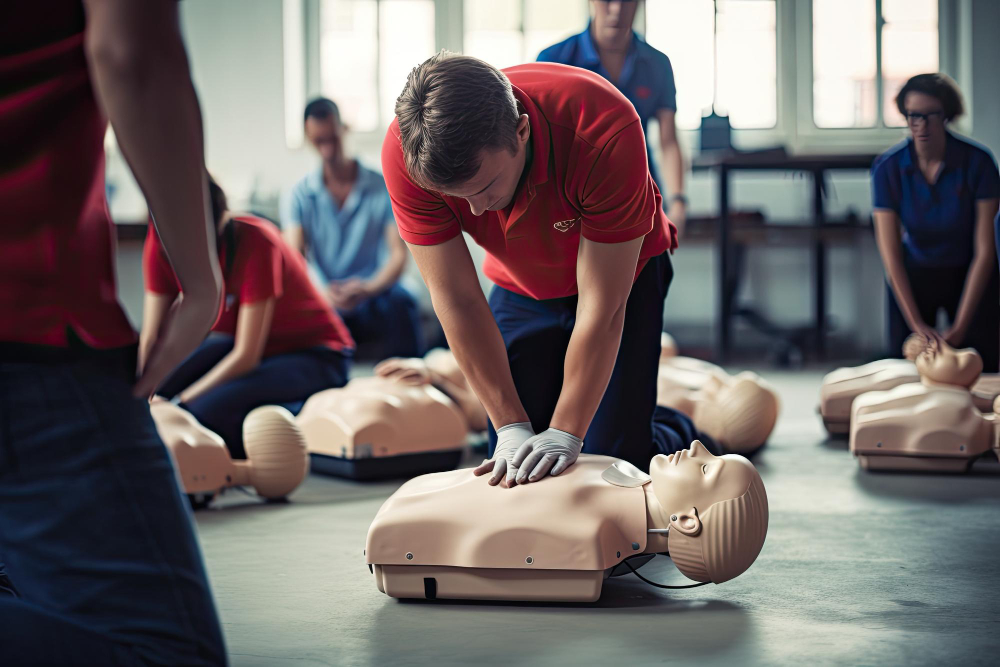
Cardiopulmonary resuscitation is an important component of first aid training. Participants learn how to respond when a person is unresponsive and not breathing normally. Training may also include the use of an automated external defibrillator and explain how it can support a person experiencing cardiac arrest.
Managing injuries and illness
Learners may practise responding to common emergencies such as bleeding, burns, fractures, soft tissue injuries, allergic reactions and other sudden health conditions. The emphasis is on recognising the situation and applying appropriate first aid within the learner’s level of training.
Communication and documentation
Providing first aid also involves communicating clearly with the casualty, bystanders and emergency responders. Participants may learn about obtaining relevant information, maintaining appropriate records and handing over important details to healthcare professionals or emergency services.
Who Should Consider This Training?
First aid knowledge can be useful for people working across healthcare, aged care, education, community services, hospitality, construction and many other industries. Employers may also require workers to hold relevant first aid competencies depending on workplace responsibilities and regulatory requirements.
Healthcare workers can especially gain a lot from keeping their hands-on emergency skills up to date. One thing to note is that completing a first aid unit does not replace professional clinical qualifications or authorise someone to perform duties outside their scope of practice.
What Should You Know Before Enrolling?
Before booking training, check that the course is delivered by an appropriate registered training organisation and confirm what is included in the training and assessment process. It is also worth checking whether practical attendance is required, as first aid competency normally involves demonstrating hands-on skills.
First Aid Training in Australia may involve both learning activities and practical assessment, so participants should be prepared to take part actively rather than relying only on online theory.
You should also check the provider’s entry requirements, delivery format, assessment arrangements and any recommended refresher training. Requirements can differ depending on the workplace, employer and role.
Why Practical Experience Matters
Reading about emergency procedures is helpful, but actually doing them helps you understand how they work when things get stressful. Hands-on activities let learners practice techniques, get feedback, and build more confidence in handling situations correctly.
First aid training in Australia can therefore be valuable for professionals who want to strengthen their emergency response knowledge alongside their existing workplace skills.
It is important to remember that first aid training is not simply about memorising procedures. Good first aid also requires calm decision-making, situational awareness, communication and the ability to recognise when professional medical assistance is needed.
How Can the Training Support Your Career?
Having proper first aid training can help improve your overall healthcare or job-related skills. For those working in care or healthcare settings, it shows they are ready to keep their skills up to date and handle emergencies in a responsible way.
However, first aid certification should be viewed as one part of professional development rather than a substitute for role-specific qualifications, registration or other mandatory requirements.
Conclusion
First aid training helps you feel more ready and in charge when dealing with emergencies. Before you sign up, make sure you know what the course requires, how the practical evaluation works, and how it connects to the job you want to get. For healthcare workers, keeping up with the latest first aid information can help them grow in their job and improve their skills at work.
Whether you are entering healthcare, developing your existing skills or looking for new professional opportunities, appropriate training can support your career development. Explore suitable learning and healthcare opportunities, and apply or register today.
Care Learning is a platform where you can get free CPD courses and enough information on multiple topics.
Frequently Asked Questions
1. What is HLTAID011 Provide First Aid?
HLTAID011 Provide First Aid is an Australian nationally recognised unit that develops skills for responding to a range of first aid emergencies, including injuries, illness, CPR and other urgent situations.
2. Is HLTAID011 suitable for healthcare workers?
Yes. It can be useful for healthcare and care workers, although professionals should also maintain any additional qualifications, registrations and clinical competencies required for their specific role.
3. Does the course include practical assessment?
Training typically includes hands-on elements where learners practice first aid techniques. The specific details about how delivery and assessment will take place depend on the registered training organisation.
4. Can I complete first aid training online?
Some providers include online learning options, but hands-on skills might need in-person training and testing. Before you sign up for training, make sure to look into the delivery requirements with the provider you've picked.
5. How often should people update their first aid abilities?
One thing to keep in mind is that refresher requirements can differ based on the competency, workplace, and employer. CPR skills are usually updated more often than general first aid knowledge, so workers need to look into the specific rules that apply to their job.