Why Are Healthcare Professionals Choosing Online AED and First Aid Training?
Do you know about the advantages of AED training and why being able to operate an AED with confidence can be crucial to being ready to react appropriately in a life-threatening situation?
In order to boost their confidence in handling unforeseen catastrophes, healthcare personnel are increasingly resorting to first aid training. In addition to challenging work schedules, flexible learning choices make it easy to brush up on important skills. Important subjects like CPR, emergency response, AED knowledge, and fundamental life-saving skills can be covered through digital education, which also lets students study at their own speed.
Why Is First Aid Knowledge Important for Healthcare Professionals?
Healthcare environments can involve rapidly changing situations where a patient’s condition deteriorates without warning.
Professionals may encounter patients, colleagues, visitors, or members of the public who suddenly become unwell. Being prepared to recognise an emergency and respond appropriately can help initiate appropriate care while additional assistance is being arranged.
The duties of a healthcare worker can change depending on their position, level of expertise, and workplace regulations. Nonetheless, adhering to essential emergency protocols contributes to a more secure and organised setting.
The Increasing Allure of Distance Education
Conventional classroom instruction is still beneficial, especially when practical evaluation and hands-on demonstration are needed.
Online learning, however, provides a distinct kind of flexibility. Learning resources are frequently available to professionals at home, during breaks, or in another convenient place.
Online first aid training can be particularly useful for professionals who need to refresh theoretical knowledge without attending a scheduled classroom session. Digital learning can also allow learners to revisit information that they find challenging. This can make the educational experience more personalised and convenient.
What Can an Online Course Cover?
The content of online programmes varies considerably between providers. A well-structured course may introduce emergency recognition, CPR principles, bleeding, choking, recovery positioning, AED awareness, and other relevant topics.
Some programmes also explain how healthcare professionals should respond to common emergencies while waiting for more advanced assistance. Theoretical education can therefore provide a useful foundation for developing awareness and understanding.
However, learners should always check whether a particular course includes practical assessment or provides a certificate that meets their employer’s requirements.
Understanding the Role of an AED
An AED is designed to analyse a person’s heart rhythm and provide an electrical shock when appropriate.
The apparatus is designed to assist in responding to specific types of sudden cardiac arrest. In an emergency, skilled responders can follow the proper order with the help of modern technology that offer audible or visual directions. Healthcare workers can feel more prepared when an AED is accessible if they know how to use an AED.
Professionals should still follow their current training, local policies, and the instructions provided by the device.
What Is an Automated External Defibrillator?
An automated external defibrillator is a portable medical device used during certain cardiac emergencies. It analyses the electrical activity of the heart and determines whether a shock is appropriate.
The device does not simply deliver a shock automatically whenever it is attached to someone. Instead, it provides instructions and determines whether defibrillation is advised. Learning about the equipment can reduce hesitation and improve familiarity before an emergency occurs.
Why CPR Remains Essential
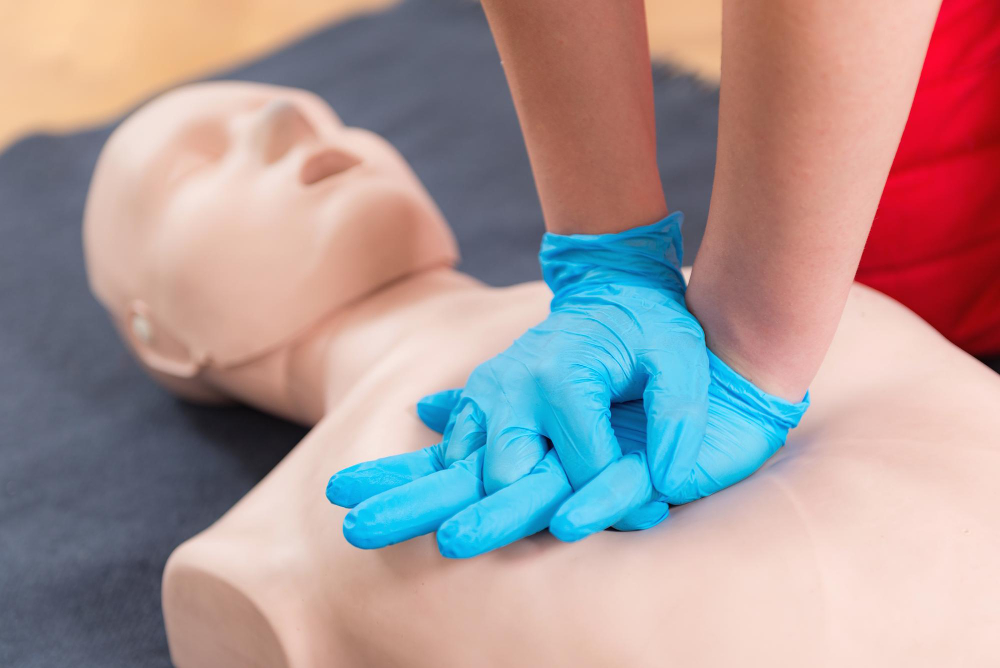
CPR is another fundamental component of an emergency response when a person is unresponsive and not breathing normally. The purpose of CPR is to maintain circulation until further intervention becomes available.
Professionals should learn the techniques according to current recognised guidance and their workplace requirements.
Practical training is particularly valuable because CPR involves physical actions that cannot be fully replicated through reading or watching online content alone.
Recognising Cardiac Arrest
Cardiac arrest is a critical emergency requiring an immediate response. A person experiencing it may suddenly collapse, become unresponsive, and stop breathing normally.
Healthcare professionals should be familiar with their organisation’s emergency response procedures and know how to activate appropriate assistance. Early recognition is important because it allows resuscitation efforts and access to a defibrillator to begin as soon as possible.
Emergency First Aid's Relevance
Knowledge of emergency first aid is not limited to cardiac situations. Healthcare workers may come across choking, serious bleeding, burns, falls, seizures, allergic reactions, or an abrupt decline in a patient's health. The situation and the professional's training determine the right course of action.
A broad educational foundation can help workers recognise situations requiring urgent escalation and appropriate intervention.
Building Practical First Aid Skills
Learning emergency theory is only one part of becoming prepared. First aid skills need to be reinforced regularly so that professionals can recall important procedures when under pressure.
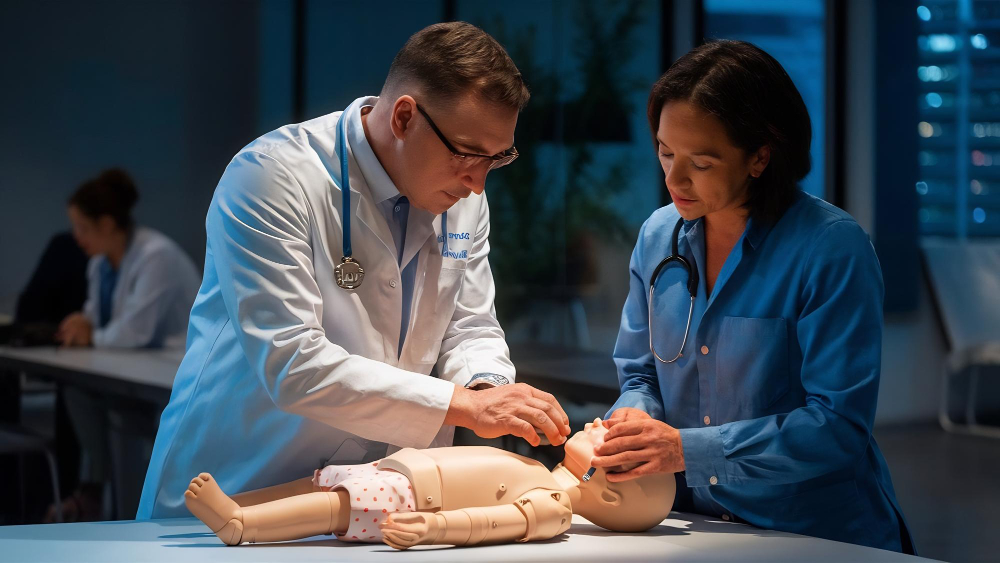
Practical sessions, simulation exercises, workplace drills, and refresher education can complement online learning. Healthcare organisations can also support preparedness by ensuring staff know where emergency equipment is located and understand how to activate their internal emergency response system.
Knowing Defibrillation
When certain cardiac arrest rhythms occur, defibrillation entails giving the heart a regulated electrical shock. The goal is to assist in the restoration of an efficient cardiac rhythm.
Healthcare workers do not need to memorise every technical aspect of the device to use an AED appropriately. Training should instead help them understand when the equipment may be required and how to follow its prompts safely.
Why Busy Professionals Can Benefit from Online Learning
Attending scheduled class sessions can be difficult for healthcare professionals due to their hectic schedules. More control over when learning occurs can be obtained through online schooling.
A free online first aid course may be particularly attractive to learners who want to explore a subject before deciding whether additional accredited or practical training is required.
Professionals should nevertheless verify the quality, learning outcomes, assessment method, and recognition status of any course they complete. Free does not automatically mean unsuitable, but it also does not automatically mean that a course satisfies workplace compliance requirements.
What Can Students Expect from Online AED Training?
The goal of the device, when it can be used, fundamental safety precautions, pad positioning guidelines, and how to obey device cues should all be covered in AED training. Theoretical information regarding these topics can be found online.
However, healthcare professionals should find out if a practical demonstration of AED expertise is required for their role. A hybrid approach that blends digital learning with practical experience may provide a more comprehensive learning experience when practical capacity is required.
Getting Ready for Medical Emergencies
Unpredictable and uncomfortable situations might arise from a medical emergency. Instead of depending solely on instinct or recollection, experts who are well-prepared can react more methodically. Training should encourage learners to assess the situation, seek appropriate assistance, communicate clearly, and work within their professional responsibilities. It should also reinforce the importance of protecting the safety of the patient, responder, and people nearby.
Gaining Life-Saving Capabilities Over Time
Maintaining life-saving skills is more beneficial than learning them once and then forgetting them.Professionals can review key ideas and pinpoint places where more practice could be helpful with regular refreshers.
Healthcare employers can encourage this through structured training programmes, emergency simulations, competency assessments, and access to appropriate learning resources.
Professionals can also take responsibility for maintaining their knowledge by reviewing relevant guidance and completing appropriate refresher education.
Is Online Training Enough?
This is one of the most important questions for healthcare professionals.
Online learning can be an effective way to build theoretical understanding and refresh knowledge.
However, some roles require practical competence that must be demonstrated through hands-on assessment.
Professionals should therefore check the requirements of their employer, regulator, professional role, or relevant training provider before relying on an online course for compliance.
The best learning method depends on what the learner needs to demonstrate.
Finding the Proper Course
Prior to enrolling, think about:
- Course material
- Reputation of the provider
- The format of learning
- Requirements for assessment
- Details about the certificate
- Options for useful training
- Length of the course
- Expectations for renewal
- Pertinence to your line of work
A course should provide clear information about what learners will achieve by completion.
Healthcare professionals should be cautious about programmes that make broad claims about certification without clearly explaining their assessment or recognition arrangements.
The Future of Flexible Emergency Training
Digital education is likely to remain an important part of professional learning.
Technology allows healthcare workers to access educational content quickly and revisit subjects when needed.
However, digital learning should complement appropriate practical education rather than replace it where hands-on competence is essential.
A combination of online theory, practical training, workplace simulation, and regular refreshers can provide a more comprehensive approach to emergency preparedness.
To Wrap Up
Healthcare professionals are choosing flexible digital education because it can make emergency learning easier to access alongside busy professional responsibilities.
Online resources can help learners understand CPR, AED use, emergency response, and other essential concepts.
At the same time, practical competence remains important for physical skills such as resuscitation and equipment use.
The most effective approach is therefore to choose training that matches the requirements of your role and combines convenient learning with appropriate practical experience where necessary.
Care Learning is a platform where you can get free CPD courses and enough information on multiple topics, helping healthcare professionals continue learning and develop their knowledge at a convenient pace. Apply or register today.
FAQs
1. What motivates medical professionals to enrolll in online first aid courses?
Professionals can study emergency care topics around their busy schedules thanks to online learning’s flexibility. It also makes it easy to refresh their knowledge when needed.
2. Is it possible to learn how to use an AED online?
AED principles and methods can be explained online, but depending on your work, employer, and applicable requirements, you may need to demonstrate competency through hands-on training.
3. Is a free online first aid course suitable for healthcare workers?
It can provide useful educational information, but learners should check whether the course meets their specific workplace or professional requirements before using it for compliance.
4. Why is knowing how to use an AED and perform CPR important?
They form crucial portions of the response to certain life-threatening events. Prompt detection, adequate resuscitation, and speedy availability of defibrillation can promote an efficient emergency response.
5. Should medical personnel update their emergency training?
Sure. Regular refresher training and hands-on practice help professionals stay confident and familiar with emergency procedures and equipment.