

Basic Life Support (Theory)

Top Rated4.7(34 reviews)

Basic Life Support, commonly known as BLS, involves the essential care provided by first responders, healthcare professionals, and public safety workers to individuals facing cardiac arrest, respiratory distress, or airway blockage.
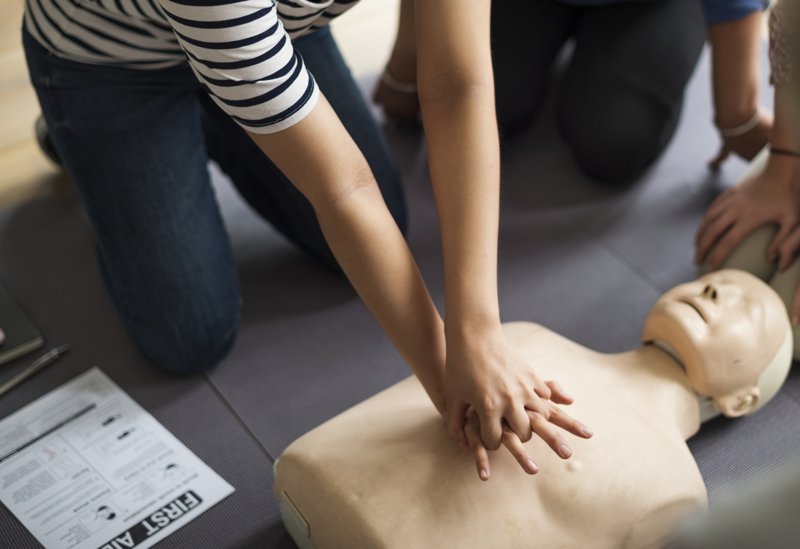
10 Modules1 hour
£169£0
Start Learning
Basic Life Support (Theory)

Learning Outcomes

What you'll learn

  • ABCD Assessment: Learn to evaluate a deteriorating resident using the ABCD approach.
  • Choking Response: Understand the steps to take when someone is choking.
  • Recovery Position: Master when and how to place someone in the recovery position.
  • Cardiac Arrest Recognition: Identify the signs of a cardiac arrest.
  • Lung Ventilation: Initiate and sustain effective lung ventilation techniques.
  • Chest Compressions: Begin and continue effective chest compressions.
  • AED Utilization: Learn to operate an Automated External Defibrillator effectively.
  • Emergency Reporting: Know how to document and report details of an emergency situation.
  • CPR Policy Application: Understand when to apply the 'Do Not Attempt CPR' local policy.
  • CPR Management in COVID-19: Handle CPR procedures in a care home during the Covid-19 pandemic.

Stay updated with our

Healthcare trainingHealthcare training

Training Overview

  • Actions to Take When Someone is Choking
  • Procedures for Chest Compressions
  • Basic Life Support (BLS) Approach and Steps
  • Methods for Assisting with Lung Ventilation
  • Usage of Automated External Defibrillator (AED)
  • Documentation and Reporting Procedures
  • Understanding Do Not Attempt CPR (DNACPR), ReSPECT, and ADRTs
  • Heart Attacks vs Cardiac Arrest
  • Managing a Cardiac Arrest during Covid-19
  • Summary
Healthcare trainingHealthcare trainingHealthcare trainingHealthcare trainingHealthcare trainingHealthcare trainingHealthcare trainingHealthcare trainingHealthcare trainingHealthcare training

Top reviews

Bothwell

Bothwell

User fromcare-learning

5

easy to comprehend

Posted on 26/05/2026

QU

Queendaline

User fromcare-learning

5

Great

Posted on 30/03/2026

CH

Chinedum

User fromcare-learning

5

Very informative

Posted on 25/04/2026

Bothwell

Bothwell

User fromcare-learning

5

easy to comprehend

Posted on 26/05/2026

QU

Queendaline

User fromcare-learning

5

Great

Posted on 30/03/2026

CH

Chinedum

User fromcare-learning

5

Very informative

Posted on 25/04/2026

You May Also Like

Take Your
Learning Anywhere

Stay on top of your learning with the Care Learning app.

Download on the App StoreGet it on Google Play

Are you a qualified
Trainer or Instructor?

Join Care Learning as a trainer and deliver high-quality courses to learners across healthcare and workplace training.

Refer a Friend &
Earn Rewards.

Invite healthcare professionals to join Care Learning and get rewarded when your referral successfully joins.

1 / 3

Frequently asked questions

Ask, “Are you choking?” If they can cough, talk, or breathe, it’s mild. If they can’t do any of these, it’s severe choking and needs immediate action.

Alternate up to five back blows with five abdominal thrusts. Continue until the blockage clears, help arrives, or the person becomes unconscious.

Start CPR if a person is unresponsive and not breathing normally. Call 999, begin chest compressions, give rescue breaths if trained, and use an AED if available.

No. DNACPR only applies to CPR. The person still receives appropriate medical treatment, comfort care, and hospital admission if needed.