What Are the Basic Life Support Guidelines in an Emergency?
A medical emergency can become life threatening within minutes, making a quick and organised response essential. Basic life support guidelines provide a structured approach to recognising cardiac arrest, starting cardiopulmonary resuscitation, using an automated external defibrillator, and responding to choking until further medical help arrives.
Basic life support is about keeping a person's circulation going and making sure they get enough oxygen when they aren't breathing properly. Taking action early can increase the chance of surviving until emergency help and advanced medical treatment arrive.
What Is Basic Life Support?
Basic life support is the immediate care given to someone who is having a cardiac arrest or another serious emergency. It is made to keep the body's important functions running until help from a doctor can be reached.
The approach generally includes:
- Checking whether the scene is safe
- Assessing the person’s responsiveness
- Checking breathing
- Calling emergency medical services
- Starting chest compressions when indicated
- Providing rescue breaths where appropriate
- Using an AED as soon as one is available
- Responding appropriately to choking
- Continuing care until help takes over or the person shows signs of recovery
The exact approach can vary according to the person’s age, circumstances and the responder’s level of training.
1. Check the Scene and Person
Safety should be considered before approaching someone who appears unwell or unconscious. Look for immediate dangers such as traffic, fire, electrical hazards, or other risks.
Once the scene is safe, check whether the person responds. Speak loudly and gently tap their shoulders if appropriate.
A person who does not respond should be assessed promptly for normal breathing.
2. Assess Breathing
Look for normal breathing and signs of life. Occasional gasping or abnormal breathing should not be treated as normal breathing in an unresponsive person.
A person who is unresponsive and not breathing normally should be treated as being in possible cardiac arrest. Emergency medical assistance should be activated immediately.
Rapid recognition is an important part of an effective cardiac arrest response.
3. Call for Emergency Help
Emergency services should be contacted as soon as possible. Ask someone nearby to call for help and bring an AED if one is available.
A lone responder should follow the emergency response system available in their location and use a mobile phone where possible while beginning resuscitation.
Clear communication is important. Tell the emergency operator what has happened, where the person is and whether they are responsive and breathing normally.
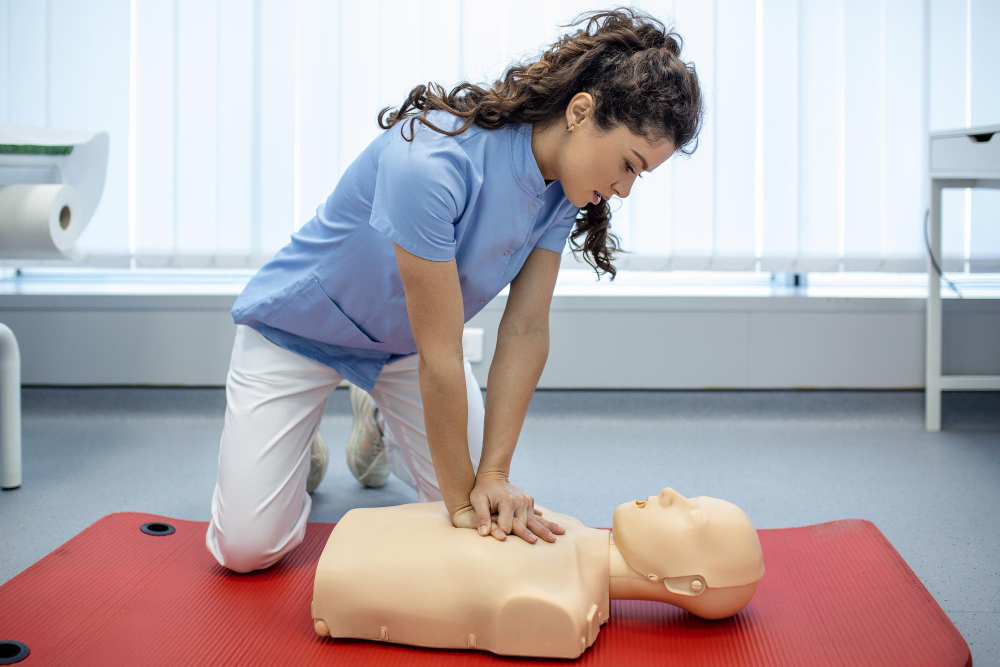
4. Start Chest Compressions
Chest compressions help circulate blood throughout the body when the heart isn't working properly anymore.
Effective CPR techniques include:
- Always put the person on a flat, even surface when you can.
- Place the heel of one hand in the center of the chest.
- Placing the other hand on top
- Keep the arms as straight as you can.
- Compressing the chest firmly and consistently
- Letting the chest move back completely between each compression.
- Minimising interruptions
For adults, the usual CPR instructions suggest doing chest compressions at a rate of 100 to 120 times per minute and pushing down about 5 to 6 centimeters, but not too hard.
Training is important because the way you perform the technique, how you position yourself, and the quality of compression you give can all influence how well resuscitation works.
5. Provide Rescue Breaths Where Appropriate
Chest compressions are a key part of CPR, but trained people can also help with breathing support.
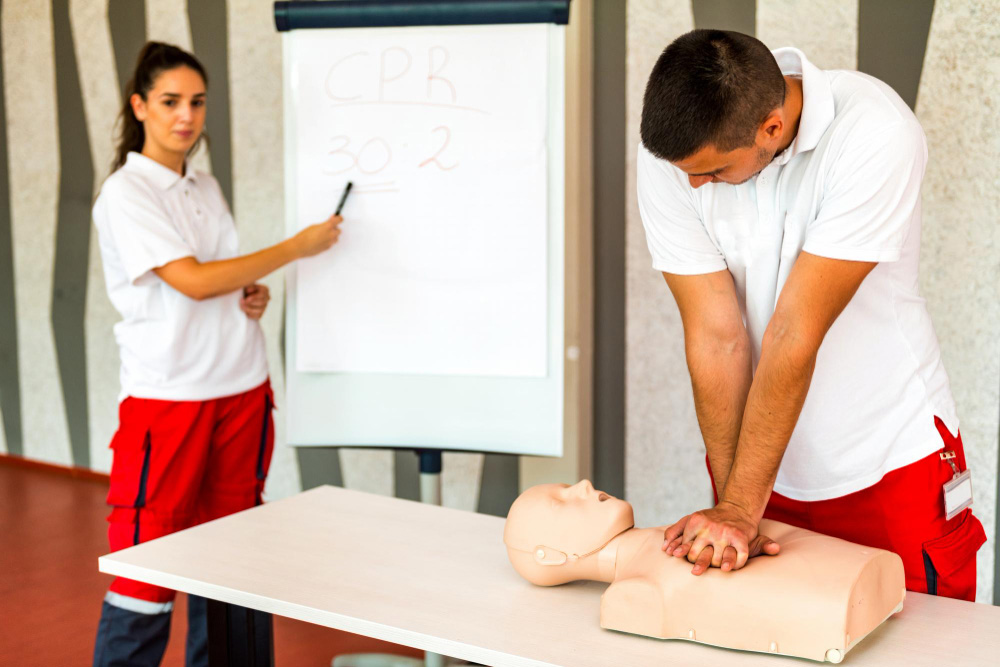
Rescue breathing is when you give breaths to someone who isn't breathing properly. For trained rescuers, standard adult CPR usually follows a 30 compressions followed by 2 breaths pattern.
If the responder has been trained to use equipment, a pocket mask or bag valve mask may be used.
People who are unwilling or unable to provide rescue breaths should follow current guidance for hands-only CPR while waiting for emergency assistance.
6. Use an AED as Soon as Possible
An automated external defibrillator can analyse the heart rhythm and determine whether an electrical shock is appropriate.
CPR and AED use should begin as soon as the equipment becomes available.
A typical AED response involves:
- Turning on the device.
- Following the spoken or visual instructions.
- Exposing and preparing the person’s chest as directed.
- Applying the AED pads correctly.
- Ensuring nobody is touching the person during rhythm analysis.
- Delivering a shock only when instructed.
- Immediately resuming CPR when directed.
AEDs are designed to guide the responder through the process, but practical training can improve confidence in using them during a stressful emergency.
7. Respond to Choking
A blocked airway can prevent a person from breathing and may become life threatening quickly.
A choking response depends on whether the person can cough, speak or breathe.
For a responsive adult with severe airway obstruction, current first aid approaches generally involve alternating back blows and abdominal thrusts according to recognised guidance.
A person who becomes unresponsive after choking requires emergency assistance and CPR. Each situation should be managed according to current local first aid and resuscitation guidance.
8. Continue Resuscitation
CPR should continue until one of the following occurs:
- The person shows signs of life or begins breathing normally.
- A trained healthcare professional takes over.
- Emergency responders take responsibility.
- The responder becomes physically unable to continue.
- The situation becomes unsafe.
Avoid unnecessary interruptions. Consistent compressions and early defibrillation are important parts of effective resuscitation.
Why Training Matters
Reading about resuscitation is useful, but practical skills are difficult to develop through written information alone.
Basic life support practical training allows participants to practise chest compressions, rescue breathing, AED use and emergency communication in a controlled setting.
Healthcare workers may also benefit from a BLS course for healthcare professionals that reflects their workplace responsibilities and current resuscitation standards.
Practical sessions can help learners develop confidence with equipment, positioning, communication and coordinated team responses.
BLS in Healthcare Settings
Healthcare professionals may encounter cardiac arrest in hospitals, care homes, community settings and other clinical environments.
A coordinated response can involve several people performing different tasks. One person may begin compressions while another contacts emergency services and another prepares the AED.
Regular CPR and AED training can help healthcare teams maintain important skills and understand their roles during an emergency.
Staff should also follow their organisation’s emergency procedures and use the equipment and escalation systems provided by their workplace.
Emergency Resuscitation and Professional Practice
Emergency resuscitation needs a quick evaluation, clear communication, and the right steps taken right away. It is important for healthcare professionals to understand their job responsibilities and work within their own capabilities.
The importance of regular refresher training stems from the fact that resuscitation skills can deteriorate without practice. Training should match the latest national and international guidelines and the needs of the healthcare environment.
What to Remember During an Emergency
A simple answer pattern can help lower hesitation:
Examine safety, alertness, respiration, assistance, CPR, instructions for using the AED, and proceed with treatment until help arrives.
The most important principle is to act quickly while following recognised emergency procedures.
Conclusion
Understanding the basic steps of resuscitation can help people feel more ready and confident when facing a serious emergency. Early detection, good chest compressions, right breathing techniques, quick use of an AED, and a well-organised emergency team are important parts of basic life support.
Practical training lets you learn these skills with guidance and see how they are used in real-life situations.
Care Learning is a platform where you can get free CPD courses and enough information on multiple topics. Apply or register today.
FAQs
1. What is the first thing to do when there's a BLS emergency is to check if the person is responsive and breathing?
Make sure the area is empty and safe before getting close to the person. Check if they are breathing and if they are responsive, call for help immediately, start CPR if necessary, and use an AED as soon as you can find one.
2. What is the best compression rate to use when performing CPR on an adult?
Adult CPR usually needs chest compressions done at a steady rate of 100 to 120 times per minute. Good training helps rescuers keep the right depth, pace, and method during CPR.
3. When should an AED be used?
An AED should be used right away when it becomes available for someone who is suspected of having a cardiac arrest. Follow the device instructions and keep doing CPR as told.
4. What should you do when someone is choking?
If someone is having a severe choking episode, give them first aid as recommended by the latest guidelines. If the person stops responding, call for emergency help and start CPR if needed.
5. What are the benefits of hands-on BLS training?
Hands-on sessions give learners the opportunity to practise chest compressions, AED operation, ventilation, and emergency response procedures. Repeated practice can improve confidence and help learners develop effective resuscitation skills.