

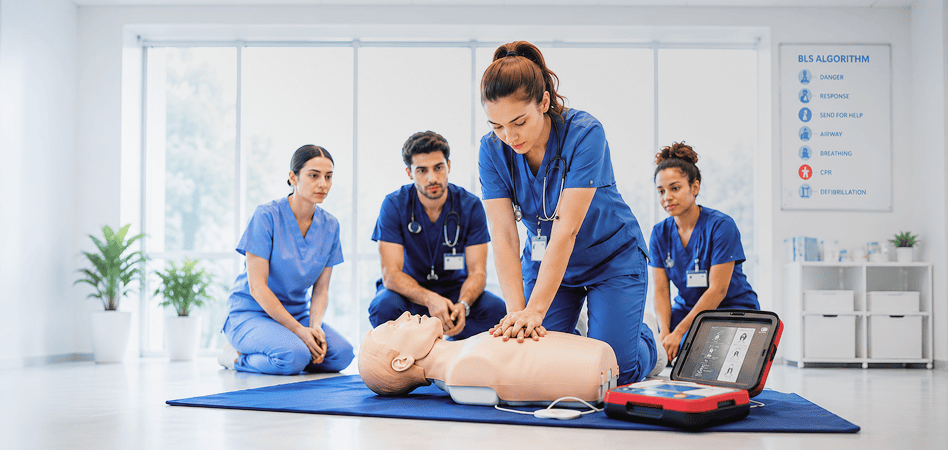
Basic Life Support & AED
Basic Life Support & AED Training prepares you to act quickly when someone experiences a life-threatening emergency. Learn the essential principles of basic life support, CPR and how to use an automated external defibrillator (AED) to assist someone in cardiac arrest. This four-hour course combines essential theory with hands-on practical assessments, helping you build the skills and confidence to respond when every second counts.
From £65
Finding sessions near
Hilton Belfast
4 Lanyon Pl, Belfast BT1 3LP, United Kingdom
About the training
This Basic Life Support and AED training builds practical skills for CPR, airway care, choking, seizures, and emergency response. Designed for UK healthcare and workplace settings, the session combines clear teaching with hands on practice and feedback.
What You'll Learn
- Assess an emergency and make sure the scene is safe.
- Complete a primary and secondary casualty assessment.
- Recognise when a casualty is unresponsive and needs urgent help.
- Open the airway and check for normal breathing.
- Perform effective cardiopulmonary resuscitation.
- Use an automated external defibrillator safely and correctly.
- Place a breathing casualty in the recovery position.
- Monitor an unresponsive casualty until further help arrives.
- Recognise and respond to seizures safely.
- Recognise and respond to choking in adults.
- Call emergency services and give a clear handover.
Stay updated with our
Training Overview
- Basic Life Support principles
- Assessing an emergency safely
- Primary casualty assessment
- Secondary casualty assessment
- Recognising an unresponsive casualty
- Opening the airway and checking breathing
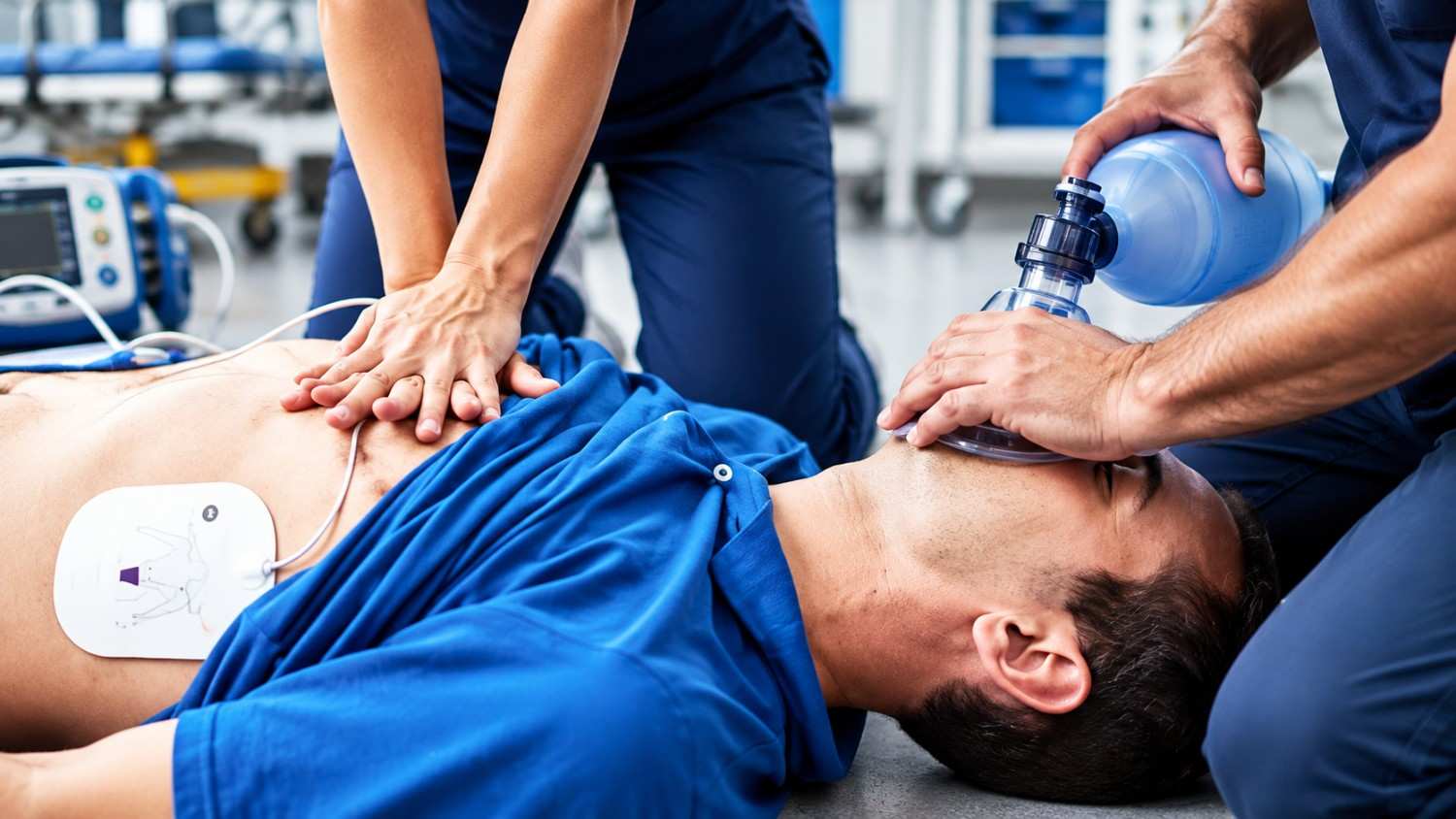
- Cardiopulmonary resuscitation
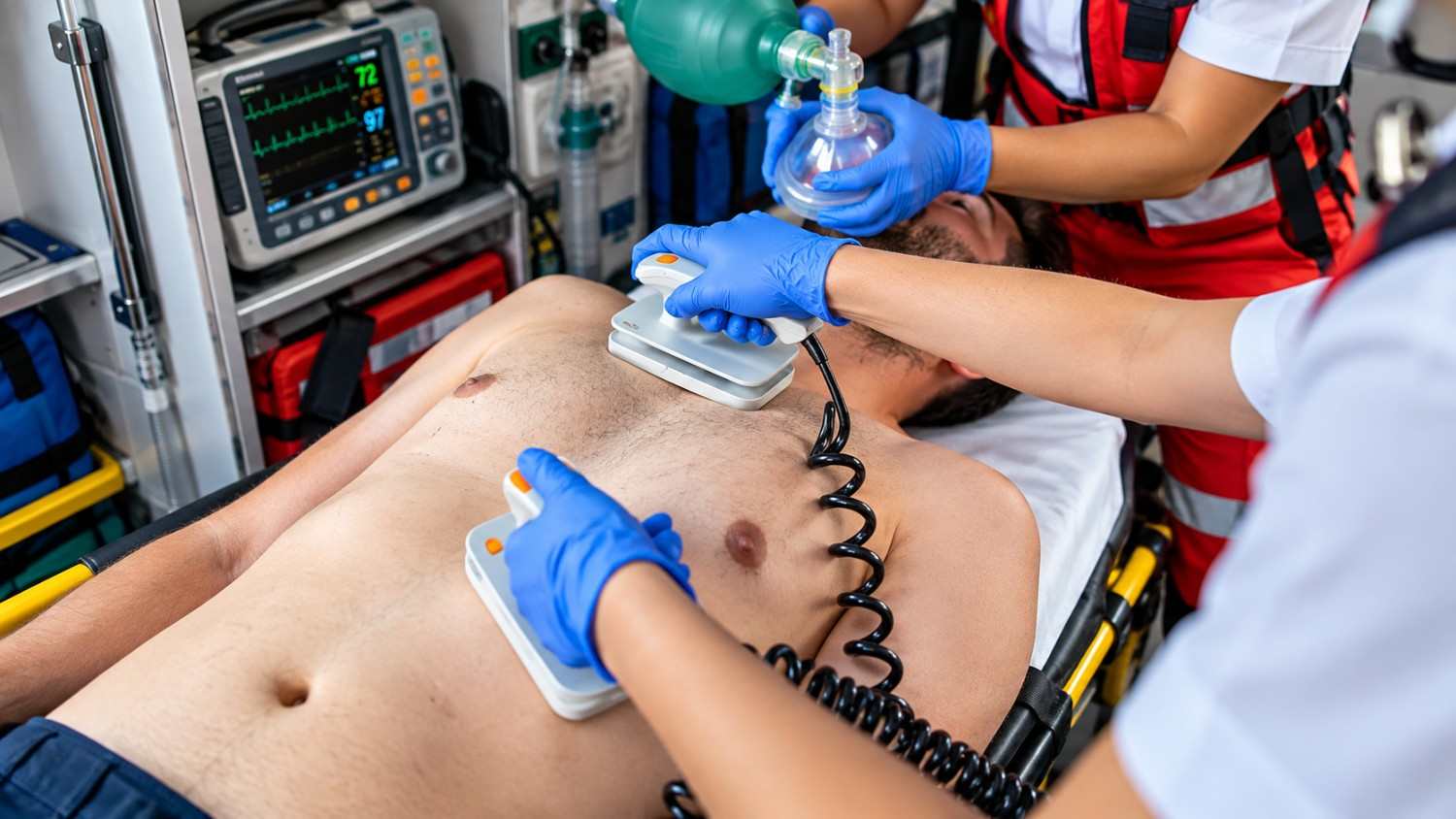
- Automated external defibrillator use
- Recovery position
- Responding to seizures and choking
- Calling emergency services and giving a clear handover
- Safe approach to an emergency scene
- Primary casualty assessment
- Airway opening and breathing assessment
- Correct CPR technique and hand placement
- AED preparation and safe operation
- Recovery position procedure
- Appropriate responses to choking and seizures
- Assessing emergency situations and casualties
- Managing the airway and checking breathing
- Performing CPR on a training manikin
- Operating an AED during a simulated emergency
- Placing an unresponsive casualty in the recovery position
- Managing a choking casualty
- Responding safely to seizure episodes
- Tutor feedback and correction of technique
- Key steps in Basic Life Support
- Common life threatening emergency scenarios
- Safe use of CPR and AED equipment
- Appropriate care during choking and seizures
- Contacting emergency services and giving a clear handover
- Common mistakes and ways to avoid them
- Final questions and knowledge review
You May Also Like

Learn Anytime
Anywhere
Experience the next level of learning with the Care Learning app. Available on Android and iOS.


Come and Work
with Us!
Join us as a healthcare trainer providing practical sessions to professionals and workers.
Apply for Trainer RoleIn-Person Practical
Healthcare Training
Enroll in our accredited, hands-on practical training sessions to deliver better patientcentred care.
Apply for TrainingRefer &
Earn Rewards.
Invite healthcare professionals to join Care Learning and earn rewards for every successful referral.
Frequently Asked Questions
It teaches CPR, AED use, airway care, recovery position, choking response and seizure care for life threatening emergencies.
It helps learners recognise emergencies, start CPR, use an AED and provide immediate care until emergency services arrive.
Healthcare staff, dental teams, care workers, support workers and workplace teams may benefit from practical BLS and AED training.
This practical training takes 4 hours and includes video learning, demonstrations, hands on practice and guided discussion.
An AED checks the heart rhythm and can deliver a shock when needed. Use it during cardiac arrest alongside CPR.