How Can AED Training Help You Use a Defibrillator in an Emergency?
Cardiac emergencies can happen unexpectedly in workplaces, healthcare facilities, public spaces or at home. Knowing what to do in those first few minutes can make a critical difference. AED training teaches people how to recognise when an automated external defibrillator may be needed, operate the device safely, and respond appropriately when someone experiences a suspected cardiac arrest. By developing practical skills and confidence, learners can prepare themselves to act quickly while emergency medical assistance is on its way.
What Is an AED and Why Is It Important?
- An automated external defibrillator (AED) is a portable medical device designed to assess a person’s heart rhythm and determine whether an electrical shock is appropriate.
- It can deliver a shock to help restore an effective heart rhythm in certain types of cardiac arrest.
- When someone collapses, becomes unresponsive, and is not breathing normally, cardiac arrest may be the cause.
- Immediate emergency action is essential because the heart may no longer be pumping blood effectively to the brain and other vital organs.
- An AED helps by analysing the heart’s electrical activity and providing clear voice or visual instructions to guide the rescuer. The device will only recommend a shock when its analysis identifies a shockable rhythm.
- Although AEDs are designed for use by members of the public, learning how to operate one beforehand can make the process less intimidating during a stressful emergency.
How Does AED Training Prepare You for an Emergency?
Learning to use a defibrillator involves more than understanding which buttons to press. Training helps learners recognise the situation, follow the correct sequence of actions, and work safely under pressure.
1. Recognising a Possible Cardiac Arrest
The first step is identifying when a person may need immediate emergency assistance. A person experiencing cardiac arrest typically collapses, becomes unresponsive, and is not breathing normally or is only gasping.
Training helps learners recognise these warning signs and understand that they should not delay action while trying to determine the exact cause of the collapse.
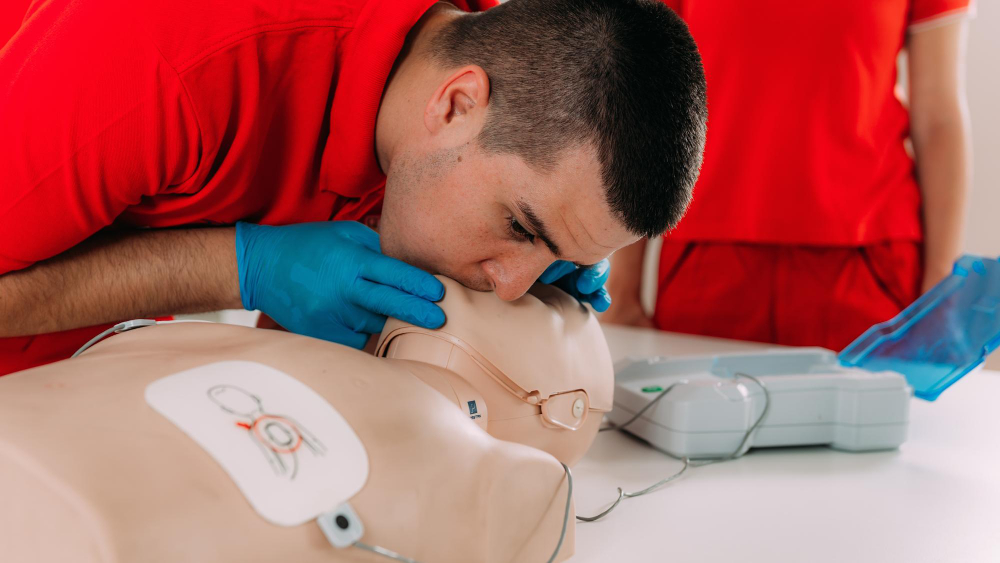
Learners also practise checking responsiveness and breathing, calling emergency services and arranging for an AED to be brought to the scene.
2. Understanding How to Operate a Defibrillator
Practical defibrillator training familiarises learners with the device, its electrode pads, voice prompts and safety instructions.
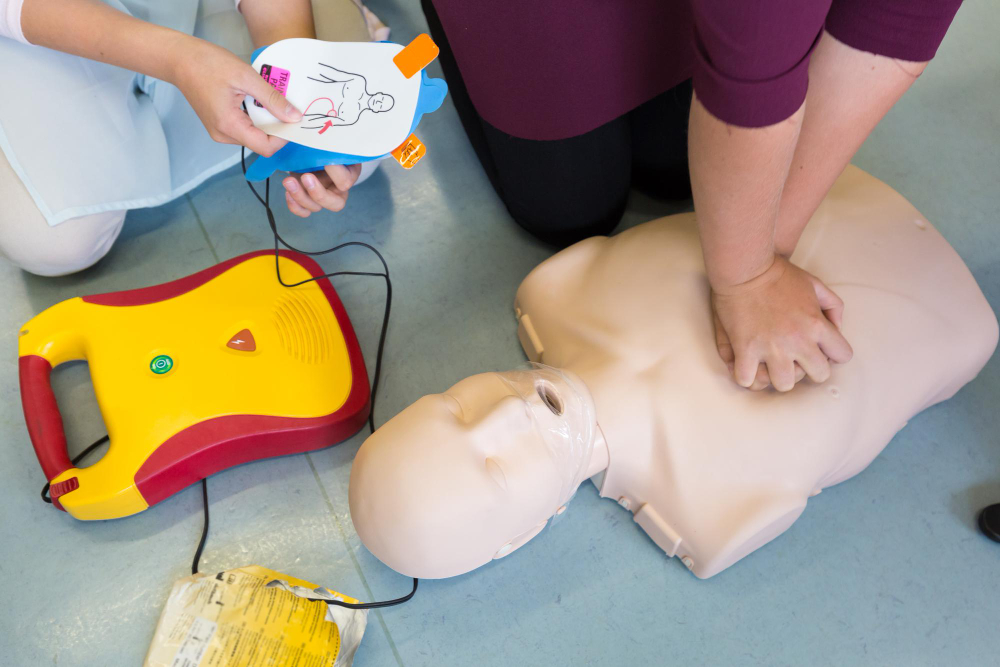
During a typical practice session, participants learn how to switch on the AED, expose the person’s chest, attach the pads according to the diagrams provided, and follow the device’s instructions.
The AED analyses the heart rhythm automatically. If it tells you to give a shock, make sure no one is touching the person before you do it. CPR should start right away after that, following the instructions from the device and the emergency guidance.
These steps allow students to become familiar with the equipment before they experience an actual emergency.
3. Combining AED Use With CPR
An AED works best when used together with CPR as part of a team effort to help someone having a cardiac arrest. CPR includes pressing on the chest to keep blood moving through the body when the heart isn't working properly anymore.
Basic life support training teaches essential emergency response skills, including recognising cardiac arrest, performing CPR and understanding how to use an AED.
During a cardiac emergency, rescuers should call emergency services, begin CPR and use an AED as soon as one becomes available. Following the device’s prompts and minimising interruptions to chest compressions are important parts of the response.
Training gives learners an opportunity to practise the sequence and understand how these actions work together.
What Do You Learn in an AED Course?
An AED course typically introduces learners to the essential knowledge and practical skills required to respond to a suspected cardiac arrest. The exact content depends on the provider and the course level.
Common learning areas include:
- Recognising an unresponsive person who is not breathing normally.
- Calling emergency services and requesting an AED.
- Being aware of a defibrillator's essential parts.
- Correctly applying electrode pads.
- Paying attention to safety instructions and voice cues.
- Giving a jolt when the device instructs.
- Conducting CPR while minimising disruptions to chest compressions.
- Reacting correctly as you wait for emergency medical personnel.
Practical scenarios including various surroundings, team communication, and the significance of adhering to current resuscitation guidelines are also covered in some courses.
Who Should Consider AED Training?
Knowing how to respond to cardiac arrest can be valuable in many settings, not just hospitals.
Healthcare professionals may benefit from developing or refreshing their emergency response skills as part of their clinical responsibilities.
Care workers and support staff can use these skills to prepare for emergencies in residential care, community services and other care environments, depending on their role and training requirements.
Workplace first aiders may need AED knowledge to respond to medical emergencies in offices, industrial settings and other workplaces.
Teachers, sports staff and community volunteers may also benefit, particularly where people gather for activities or events.
Members of the public can learn these skills too. A cardiac emergency can occur anywhere, and bystanders may be the first people able to provide assistance.
Why Opt for Combined AED and BLS Training?
The fundamental concepts of basic life support are combined with hands-on defibrillator use in BLS and AED training. Instead of presenting AED operation as a stand-alone skill, this integrated approach helps students comprehend the larger emergency response.
Through basic life support and AED training, participants can learn how to assess a situation, begin CPR, coordinate emergency assistance, and use a defibrillator in the appropriate sequence.
Practising these skills together can help learners understand when to act, how to follow device instructions and why continuous, effective CPR matters.
This knowledge can help healthcare workers, along with their specific clinical training. It offers a clear way for workplace responders and community members to learn how to handle a serious emergency that threatens someone's life.
Is AED Training Certification Important?
An AED training certification may provide evidence that a learner has completed a particular course and demonstrated the required skills. However, certification requirements differ according to the training provider, workplace, profession and jurisdiction.
Before enrolling, check whether the course includes practical assessment, which learning outcomes it covers, and whether the certificate meets your employer’s or professional body’s requirements.
It is also important to understand that completing a course does not mean the skills never need refreshing. Procedures, guidance and confidence can change over time, so learners should follow their provider’s recommendations and any workplace requirements for refresher training.
How to Choose the Right Training Course
When comparing courses, consider the following factors:
Practical learning: Look for opportunities to practise with training equipment and work through realistic emergency scenarios.
Relevant course content: Check that the programme covers CPR, AED operation, and the response steps appropriate to your needs.
Qualified instructors: Choose a provider that uses suitably qualified trainers and follows recognised, up-to-date resuscitation guidance.
Assessment and certification: Verify whether practical skills are evaluated and whether the resulting certificate satisfies any applicable standards.
Opportunities for refresher: Learn how frequently you should review your abilities to stay competent and confident.
The right course should provide clear instruction, supervised practice, and an understanding of how to respond safely during an emergency.
Conclusion
Knowing how to use a defibrillator can make you better prepared to act when someone might be having a cardiac arrest. Knowing the signs that something is wrong, asking for help right away, doing CPR, and following the steps from an AED are all important parts of responding properly. Practical training helps learners turn these steps into real skills that they can use with more confidence, especially when every moment is important.
If you are looking to build your healthcare knowledge, many courses and informative learning opportunities can support convenient upskilling, these courses can help you explore suitable work opportunities alongside your development. Apply or register today.
Care Learning is a platform where you can get free CPD courses and enough information on multiple topics.
FAQs
1. What is the primary goal of learning how to use an AED?
It helps people learn how to spot signs of a possible heart attack, use a defibrillator properly, follow the device's directions, and perform CPR alongside it until help arrives.
2. Can someone who doesn't have any medical training use an AED?
Yes. AEDs help users by giving step-by-step directions through voice or on-screen messages. Training can help people learn the steps and feel more confident when they need to respond.
3. Should CPR be done before the AED comes?
If a person isn't responding and not breathing properly, you should call for help right away and start doing CPR right then. Keep doing CPR until you get an AED, then follow the AED's instructions and try to keep the CPR going with as few breaks as possible.
4. Does AED training include CPR?
Many courses include both AED use and CPR, but the information covered can be different in each one. Check the course description to make sure it includes CPR instruction and a practical assessment.
5. When should you renew your AED training?
The time you should repeat training depends on the program you're following, the rules your company has, and any guidelines that apply. Talk to the person or company that gave you the certification and your job employer to find out when you need to update your certification, and keep working on your emergency skills regularly to make sure you know what to do and feel sure about it.